

Trump Administration Asks Supreme Court To Lift Block on Mail-Ballot Order
The decision will affect November's elections.
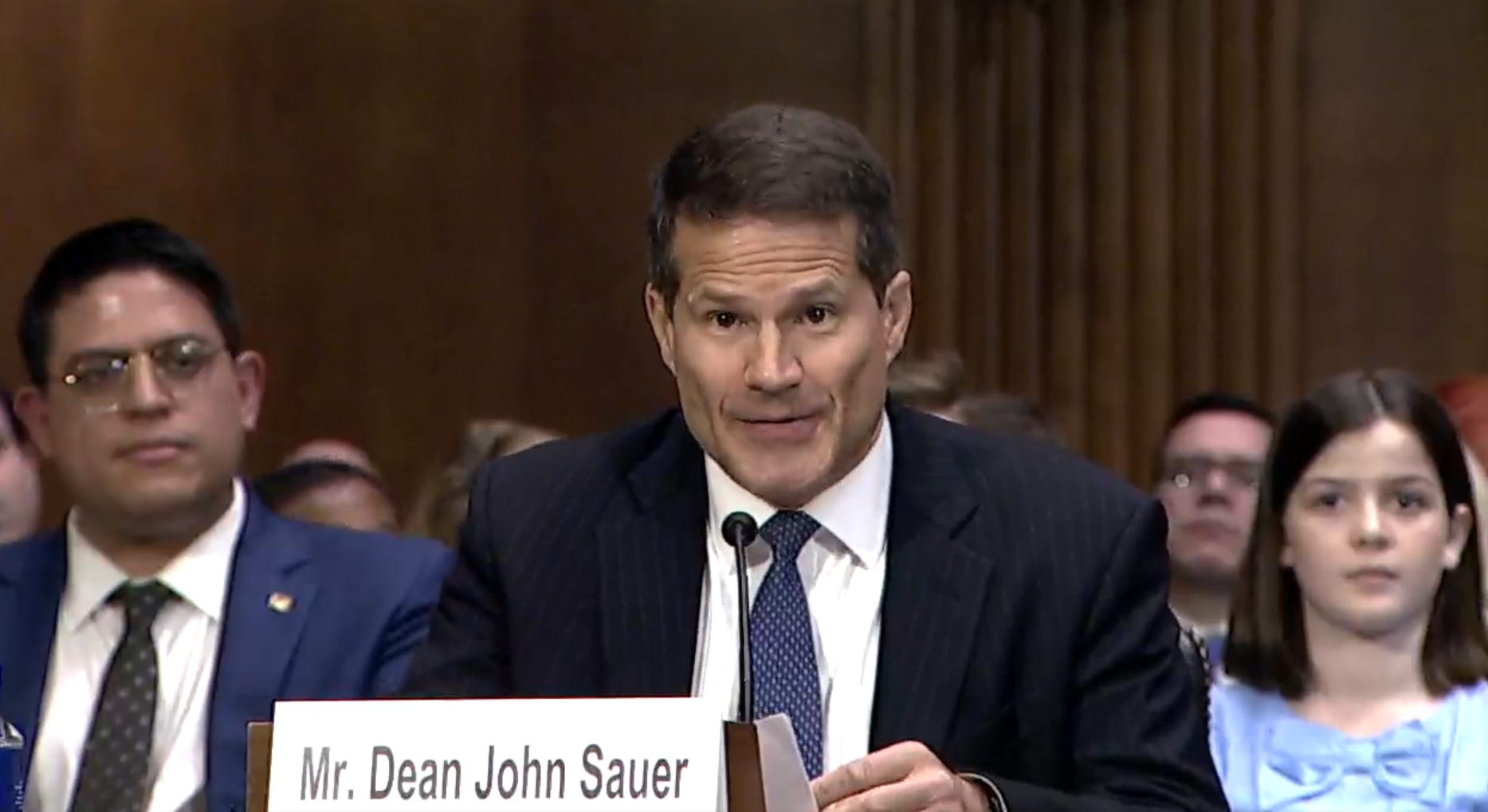
The administration Monday asked the Supreme Court to block an appellate ruling that left in place an injunction against President Trump’s executive order overhauling mail-in ballot rules, setting up a potential showdown weeks before the November election.
Justice Ketanji Brown Jackson declined its request for an immediate stay, saying parties have until August 3 to respond to the government’s filing.
Solicitor General John Sauer filed the emergency application in Trump v. California, asking the justices to stay a District Court for the District of Massachusetts injunction. It follows a July 25 First Circuit Court of Appeals order denying a stay pending appeal.
“The district court has issued an extraordinary injunction barring federal agencies from implementing an Executive Order promoting election integrity in the upcoming federal elections in November,” Mr. Sauer wrote.
At issue is Mr. Trump’s March 31 executive order Ensuring Citizenship Verification and Integrity in Federal Elections. Section 2 directs the Department of Homeland Security to compile and send states lists of confirmed U.S. citizens for verifying voter eligibility. Section 3 directs the Postal Service to write new rules for mail-in and absentee ballots, including envelope design requirements and barcodes, and refuse ballots that don’t meet the standards.
California, Massachusetts, Nevada, and 20 other states and the District of Columbia sued in April, arguing the order exceeded presidential authority. Judge Indira Talwani ruled June 25 that Sections 2 and 3 were “ultra vires and unconstitutional” and permanently enjoined federal agencies, though not Mr. Trump himself, from carrying them out in the plaintiff states through the November 3 election. Twelve other states, including Texas and Florida, intervened to defend the order.
The administration argued the states’ lawsuit was premature because neither agency had finalized any rule, and the order requires them to act only “to the extent feasible and consistent with applicable law.” Mr. Sauer cited the Supreme Court’s 2020 Trump v. New York decision, which found a challenge to a presidential memorandum on census apportionment was not yet ripe for review.
The First Circuit rejected that argument in a 2-1 order. Judges Gustavo Gelpí and Julie Rikelman, both appointed by President Joe Biden, wrote that the government had not made a “strong showing” that the states lacked standing, finding the order “targets the Plaintiff States explicitly and repeatedly” and has already forced states to divert staff and money — including on ballot envelopes that may not meet the new federal requirements.
“The Plaintiff States have no practical choice but to respond to the EO now,” the judges wrote.
Judge Joshua Dunlap, a 2025 Mr. Trump appointee, concurred in part and dissented in part. He wrote that the government was likely to succeed in challenging the states’ standing over the citizenship-list provision, since it doesn’t require states to act on the lists, and any resulting injury is “speculative and hypothetical.” He agreed, though, that the government had not shown it was likely to prevail on the Postal Service rulemaking.
The First Circuit’s ruling conflicts with a July 17 decision by the D.C. Circuit Court of Appeals, which allowed the Postal Service to keep developing its mail-ballot rule in a separate NAACP lawsuit.
In the Supreme Court application, Mr. Sauer argued the injunction causes irreparable harm because any lawful rule the government eventually finalizes may come too late to carry out before the election, since implementation must begin by early to mid-August.
“Even if the agencies’ implementation plans end up being entirely lawful, there is not enough time to obtain ordinary appellate relief from the injunction in order to carry them out before the November election,” he wrote.
The states have countered that they face pocketbook costs, possible loss of federal funding, and the threat of criminal prosecution of election officials if they don’t comply with directives built on what they call incomplete citizenship lists.
 | A guest post by
|