

First Circuit Blocks Trump's Ballot-Mail Order, Setting Up Possible Supreme Court Showdown
The decision conflicts with another appeals court's.
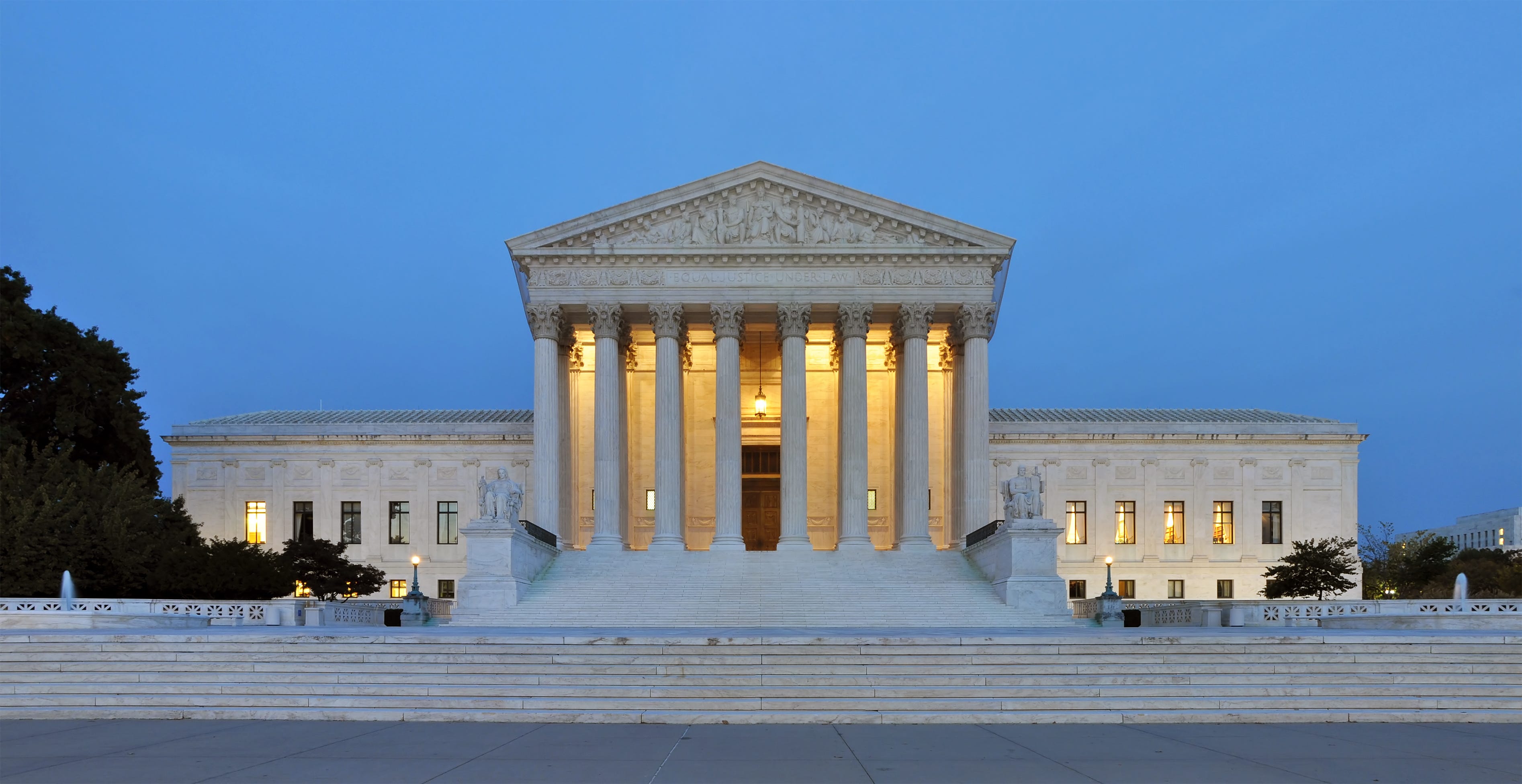
A federal appeals court Saturday refused to let President Trump’s administration enforce key portions of his ballot-mail executive order in 23 states and the District of Columbia before the November election, teeing up a potential Supreme Court emergency appeal.
Boston’s First Circuit Court of Appeals denied the administration’s and 12 states’ emergency requests to stay a lower-court injunction while their appeals proceed.
The decision conflicts in practical effect with a July 17 Court of Appeals for the D.C. Circuit ruling that allowed the U.S. Postal Service to continue developing and implementing its ballot-mail rule in separate litigation the NAACP brought.
The differing rulings involve different plaintiffs, claims, and injunctions. Still, they leave the governor facing conflicting appellate outcomes over the same executive order and its approaching election deadlines.
That pressure may force the administration to ask the Supreme Court to deliver a quick, nationally uniform answer in a potentially decisive emergency intervention before ballots must be prepared and mailed.
President Trump’s March 31 executive order directed federal agencies to create state citizenship lists and the Postal Service to propose new requirements for mail-in and absentee ballots. Those mandates include special envelope markings, unique barcodes, and state-provided lists identifying voters receiving federal ballots. The Postal Service’s proposed rule would refuse certain ballots that do not satisfy those conditions.
California, Massachusetts, Nevada, and 21 other jurisdictions sued. A federal judge in Massachusetts ruled Sections 2 and 3 of the order exceeded presidential authority and violated the separation of powers.
The injunction applies only to the plaintiff jurisdictions and federal elections held on or before November 3. It does not prevent implementation elsewhere or after that date.
The administration sought a stay based on standing and ripeness, arguing that since rules had not been finalized, the order couldn’t be challenged. It did not defend the order’s legality on the merits at this stage, Boston’s First Circuit said.
The majority concluded the government had not made a “strong showing” the states lacked standing or their claims were premature.
The court said Saturday the order had already required states to divert personnel, develop compliance plans, and prepare for rapidly approaching changes. Several states have purchased ballot envelopes that might not satisfy the proposed requirements.
“The Plaintiff States have no practical choice but to respond to the EO now,” said Judges Gustavo Gelpí and Julie Rikelman, both appointed by President Joe Biden.
The judges also cited possible prosecutions of state and local officials, noting the administration indicated citizenship lists could support investigations and potential criminal cases.
The majority rejected the government’s claimed harm from a “two-tiered system” of ballot-mail rules as insufficiently supported. It said the record showed states faced staffing costs, financial losses, possible funding cuts, prosecution risks, and interference with sovereign election authority.
The ruling was not unanimous in every respect.
Judge Joshua Dunlap, a Mr. Trump appointee, concurred in part and dissented in part, saying the injunction should have been stayed for Section 2(a) and part of Section 2(b). Mr. Dunlap said the former merely directs the federal government to provide citizenship information to states without requiring states to act on it. “Because any injury from the compilation and distribution of State Citizenship Lists is thus speculative and hypothetical, Plaintiff States can show no harm stemming from that provision,” he wrote.
The judge agreed, however, that the government had not shown likely success regarding the Postal Service provisions. Their detailed requirements and election deadlines created concrete and imminent burdens, he said.
The D.C. Circuit earlier reached the opposite result in the NAACP case, concluding the Postal Service was likely to prevail on ripeness and settlement-enforcement arguments.
 | A guest post by
|