

Can Haley Stevens Survive Michigan Senate Endorsements from Peters and Stabenow?
Primary opponent Abdul El-Sayed is trying to use the Democratic establishment against her.
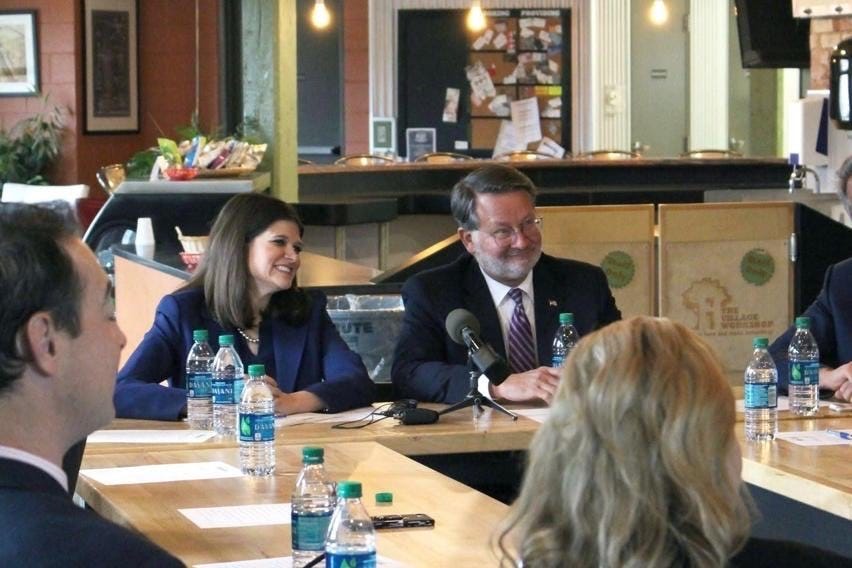
In any other year, endorsements from two Michigan senators would be a boost to a Democratic candidate vying for a Senate seat. (Republicans haven’t won a Senate race in the state since 1994, so there are no coattails to ride.) But in 2026, with the Democrat Socialists of America the new force on the blue team, it’s closer to a liability.
Senator Gary Peters endorsed Congresswoman Haley Stevens to replace him Monday, saying, “Michigan — and the country — can’t afford to lose this seat.” Debbie Stabenow, who didn’t run for reelection to the chamber in 2024, endorsed Ms. Stevens months ago.
While Ms. Stabenow’s replacement, Senator Elissa Slotkin, has not yet spoken out on the November race, the names Peters and Stabenow carry great weight in Democratic circles.
That is establishment Democratic circles. But this year the Democratic establishment is on the ropes. It’s fighting the Democrat Socialists of America for control of the party — and by some accounts, it is losing. The party’s Senate primary in Michigan is of great interest nationwide as a test of strength for the two factions.
When the race began, former health official Abdul El-Sayed and state Senator Mallory McMorrow both ran left-wing campaigns. Both vowed to oppose a Democratic establishment they view as compromised and ineffective.
Ms. McMorrow said she wouldn’t support a new term for Chuck Schumer as leader of the Senate Democrats.
Mr. El-Sayed took it several steps further, opposing not just the New York senator but the American Israel Public Affairs Committee, which he says has empowered Mr. Schumer and other establishment Democrats.
During the state’s “debate week” last week, Mr. El-Sayed declared Israel and AIPAC would be happy with either Ms. Stevens or the Republican candidate, Mike Rogers, as Michigan’s next senator. “They’re comfortable with both of my opponents,” he said. “They know they’ll have a reliable voice in the U.S. Senate.”
Ms. Stevens, on the other hand, has said “Israel comes to me in my dreams.” Normally, such associations might benefit a Democrat statewide candidate in Michigan. Instead, Ms. Stevens and Israel feel the need to distance themselves from each other.
Politico describes Israel Prime Minister Benjamin Netanyahu as giving Ms. Stevens a “lifeline” on Israel — a lifeline by way of an attack.
“Hours after the Israeli prime minister criticized Stevens by name in a CNN interview, the Michigan Senate hopeful brandished that stamp of disapproval in a fiery debate in an effort to blunt rival Abdul El-Sayed’s continued attacks over her ties to the pro-Israel lobby,” the outlet said.
Mr. Peters and Ms. Stabenow were always considered reliable friends of Israel. Their support for Ms. Stevens fosters the belief, fair or unfair, that she would be too.
All this Israel talk is pretty far afield for a Senate race in Michigan.
But it’s 2026. As such, two endorsements that might have sealed the deal for Ms. Stevens in any other year have turned into an I’m-rubber-you’re-glue situation, wherein Mr. El-Sayed turns the congresswoman’s popularity among respected establishment figures into a negative.
He’s already started. His spokeswoman Roxie Richner told the Detroit News that though “it’s to be expected, it’s disappointing to watch Sen. Peters succumb to the Stevens’ campaign’s desperation after committing to let the voters decide.”
She added: “Nothing says change like the last two senators trying to pick the next one.”
 | A guest post by
|