

Washington Must Seize the Opportunity To Stop Iran's Axis of Resistance
Your guide to what's news in foreign affairs — and why it matters.
Iran, in a desperate effort to preserve its negotiating leverage over the United States in the Strait of Hormuz, is betting its so-called Axis of Resistance — including Hamas, Hezbollah, and the Houthis — is its last and best trump card.
It has already repeatedly used it in southern Lebanon, where Hezbollah continues to exchange fire with the Israel Defense Forces. The U.S.-designated terrorist group refuses to disarm despite being required to do so under United Nations Resolution 1701, which the Security Council adopted in 2006.
In light of increased U.S. attacks on Iran, especially in and around the Strait of Hormuz, the Islamic Revolutionary Guard Corps Monday expanded its playbook to Yemen.
Brigadier General Ahmad Vahidi, then IRGC’s commander, dispatched an Iranian Mahan airliner to fly a Houthi delegation back to Yemen from Tehran via a direct route.
Doing so was a direct violation of a United Nations-brokered truce that went into effect April 2, 2022. The agreement stipulates all flights must go through Jordan for a security check to prevent the IRGC from smuggling weapons via air into Houthi-controlled Yemeni territory.
To stop the flight from landing, the Presidential Leadership Council of the Republic of Yemen — its legitimate government — bombed the runway at Houthi-controlled Sanaa International Airport in northwestern Yemen.
The Houthis accused Riyadh of conducting the airstrikes, and their military spokesman, Yahya Saree, claimed the attack was “blatant aggression.”
Notably, Iran quickly condemned the attack and placed the blame on Saudi Arabia. In a statement released on Press TV, an Iranian news agency, it said, “Iran condemns Saudi attack on Sanaa airport as a breach of law [and Yemen’s sovereignty].”
Really?
Tehran’s notion of sovereignty is certainly novel. The Houthis, like Hezbollah in Lebanon, are not the legitimate government of Yemen. They are illegally occupying 20 percent of Yemen, including the capital city of Sanaa.
Tehran’s view is that its IRGC-backed Axis of Resistance proxies are the ultimate arbiters of Lebanese and Yemeni sovereignty despite being illegitimate.
Significantly, and likely at the IRGC’s direction, the Houthis then conducted a retaliatory strike. They launched multiple ballistic missiles and drones at the Abha International Airport, which is located in southwest Saudi Arabia near the Red Sea.
The Houthis also threatened to attack the King Khalid International Airport on the outskirts of the capital. Riyadh, for now at least, stood down after successfully intercepting all of the missiles.
The kingdom undoubtedly understood the game Iran is playing. On one level, it was a warning shot for Saudi Arabia to stay out of Iran’s fight with the United States over the Strait of Hormuz. On another level, it was an overt threat that the IRGC is willing to spread the conflict to Yemen and the Bab el-Mandeb Strait — the key waterway leading to the Suez Canal in the Red Sea.
Nonetheless, Mr. Vahidi and his IRGC commanders are missing a far bigger message being pointedly conveyed to them by the legitimate governments of Lebanon and Yemen: They have had enough of the IRGC’s meddling via its proxies in their internal affairs.
Essentially, they are no longer buying that the Axis of Resistance is designed to confront Israel. They — correctly in our view — are now seeing it as the Shia Crescent that it is.
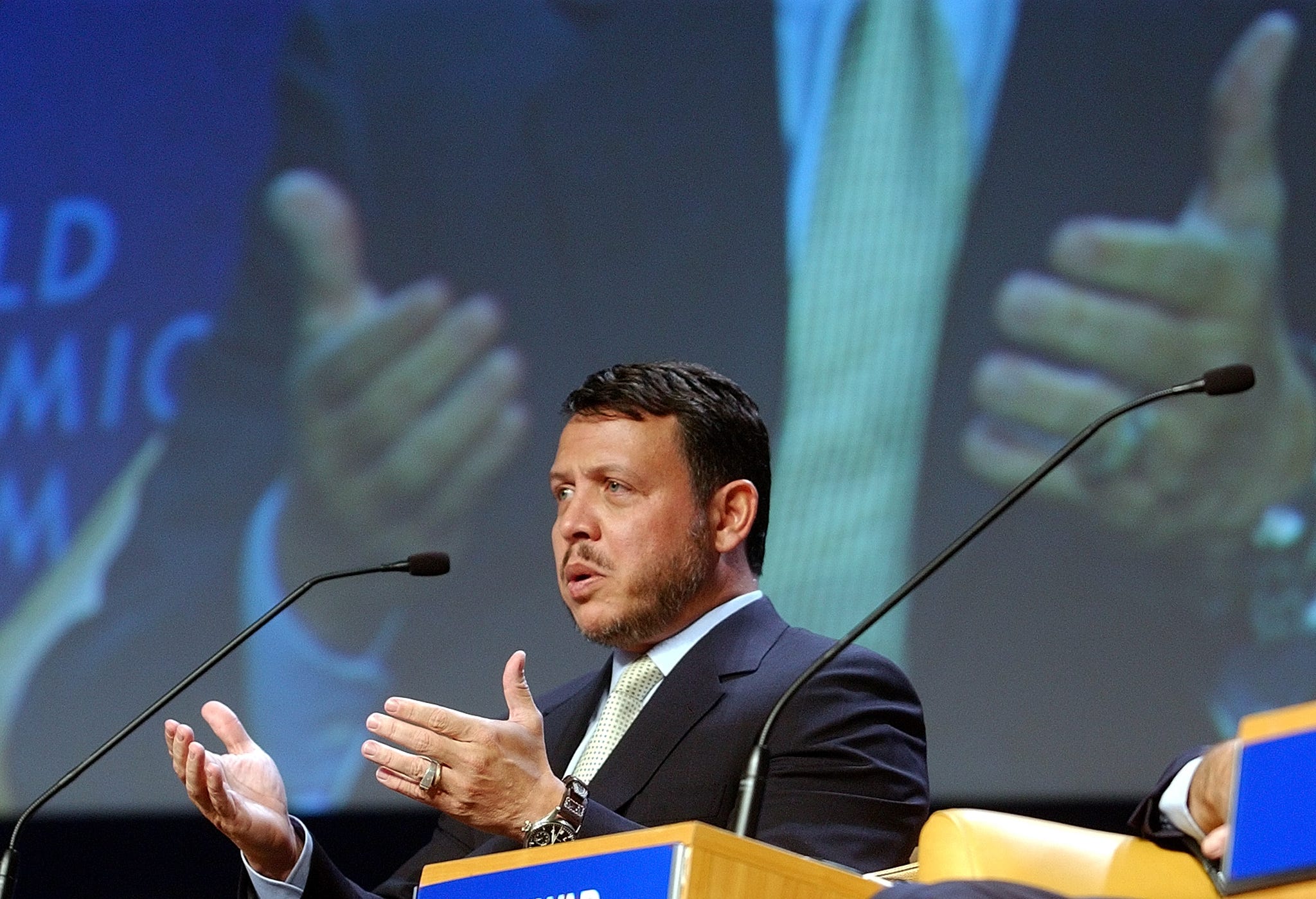
In the balance: In a 2004 Washington Post interview, Jordanian King Abdullah II argued that the IRGC was attempting to create a Shia Crescent stretching from Iran through Iraq and Syria, thereby resulting in a land bridge to Hezbollah.
The king presciently warned — again, correctly in our view — that Iran’s Shia Crescent, which was aimed at Sunni Arabs as much as it was at Israel, “would be very destabilizing for the Gulf countries and actually for the whole region.”
Twenty-two years later, King Abdullah has been proven right. If he missed anything, it was only that the IRGC created a second Shia Crescent extending into northern Yemen courtesy of the Houthis, who belong to the Zaydi branch of Shia Islam.
Finally, the governments in Lebanon and Yemen are seeing the light. Lebanese President Joseph Aoun was the first to begin fighting back against the IRGC. His approval of the Trilateral Framework Agreement Lebanon, Israel, and the United States signed last month explicitly calls for the disarming of Hezbollah.
Iran and Hezbollah, of course, rejected this. But Pandora’s box was opened, and Monday’s strike by the PLC should be viewed as one more instance of an Arab country making it clear to the IRGC that it has had enough of its interference.
Decision point: Secretary of State Marco Rubio, who is likely the unseen architect of this growing regional epiphany across the Arab world, must quickly seize the opportunity the PLC presented the United States.
Instead of Saudi Arabia backing down, the kingdom should be encouraged to stand up against the Houthis, as it once did prior to the 2022 truce.
Likewise, the United States should, in addition to its diplomatic support of and economic aid to the PLC, substantially increase military aid to the PLC forces as a tactical counter to the Houthis and a strategic check on Iran’s Axis of Resistance.
The opportunity is now. More Sunni Arab states must understand that the Shia Crescent is aimed at them. Helping the greater Middle East recognize that would be an effective way of President Trump soundly trumping one of Iran’s last remaining cards to play.
 | A guest post by
|
 | A guest post by
|