
Trump Must End Iran's Hormuz Strait Power Play
Your guide to what's news in foreign affairs — and why it matters.
The Islamic Revolutionary Guard Corps fired Thursday afternoon on a Singapore-flagged cargo ship named Ever Lovely as the vessel was transiting the Strait of Hormuz.
The incident occurred 7.5 nautical miles southeast of Dahit, Oman. The ship was struck on its starboard side by an Iranian drone, “causing damage to its bridge.”
President Trump was not pleased. He railed against the Iranian attack Friday on Truth Social, saying it was “a foolish violation of our ceasefire agreement.”
The IRGC either conveniently ignored or elected not to adhere to the memorandum of understanding Mr. Trump and Iranian President Masoud Pezeshkian signed 10 days ago on June 17.
Then, during an Oval Office press gaggle at the White House, Mr. Trump hinted at what was to come. When asked what he would do about it, the president answered, “You’ll find out.” He added, “I don’t like the fact that they took a shot yesterday — actually four, we knocked three down — at a ship.”
It did not take long. Soon afterwards, Iranian media company NourNews reported sounds of explosions being heard in Bandar Sirik, a city that overlooks the Strait of Hormuz.
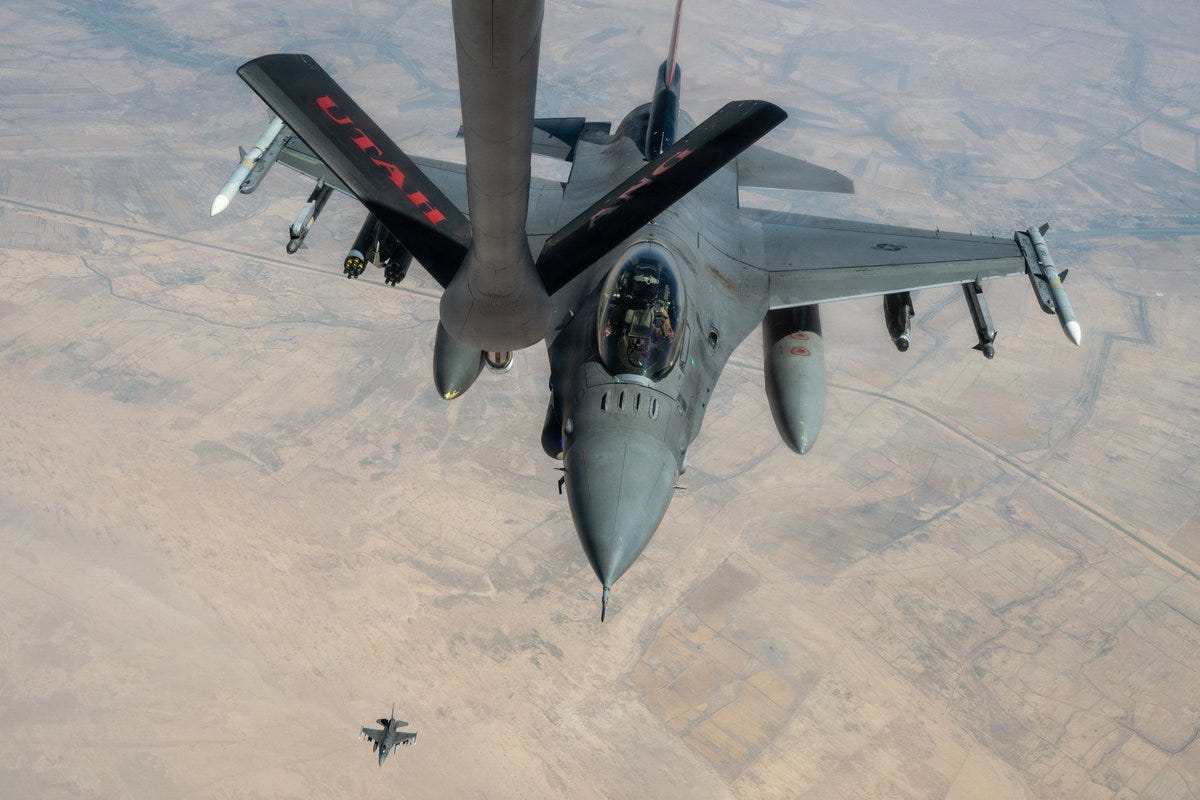
CENTCOM then issued a press release on X stating that American “forces conducted strikes against Iran ... as a powerful response to yesterday’s attack” on the Ever Lovely.
It said U.S. military aircraft targeted and hit “Iranian missile and drone storage locations and coastal radar sites” operating near the Strait of Hormuz.
CENTCOM justified the U.S. military action by stating, “The unwarranted aggression against commercial shipping by Iranian forces clearly violated the ceasefire.”
Mr. Trump’s decision to send the IRGC a message is welcome; but the military response itself was underwhelming. Essentially hitting empty buildings is not going to deter the IRGC — especially if we consider why the IRGC is choosing to challenge the United States in the Strait of Hormuz.
In the balance: The IRGC is sending a loud message to the White House that it is going to maintain Iranian control over the strategic international waterway.
Unless Mr. Trump targets IRGC leadership, Iran will not be deterred from that goal. Ebrahim Azizi, an influential member of the Iranian parliament and the chairman of the National Security and Foreign Policy Commission, made that clear on X.
“Missile and drone power, as well as management of the Strait of Hormuz, is a serious red line for Iran,” he said. Notably, his warning was aimed at neighboring Gulf states. He bluntly told them, “Gambling on the American scenario will squander your stability and security.”
Predictably, the IRGC retaliated Saturday by launching a drone attack against Bahrain. Brigadier General Ahmad Vahidi, the IRGC’s head, essentially told Mr. Trump he is not afraid of the United States let alone the president.
Decision point: Mr. Trump and his negotiating team must understand that Iran is seeking to frame America as an unreliable security partner going forward for the Gulf states.
Mr. Azizi hit on that point as well, noting on X, “The U.S. attacked Iran in the middle of negotiations once again.” Of course, he conveniently ignored the IRGC’s attack on the Ever Lovely.
Perhaps most alarming is that Iran’s bullying of the Gulf states is starting to work. Oman informed European allies that control of the Strait of Hormuz will not return to its prewar status; Muscat and Tehran will regulate it and impose fees.
Absent U.S. leadership, Washington is risking the Gulf states reaching their own accommodation with Iran. If that happens, strategically speaking, Iran will have won the war.
Mr. Trump must change that trajectory. Hitting key IRGC leadership would be a good place to start.


