
Trump Loses One Supreme Court Fight, Wins Another in Major Rulings on Executive Power
Lisa Cook stays at the Federal Reserve — for now.
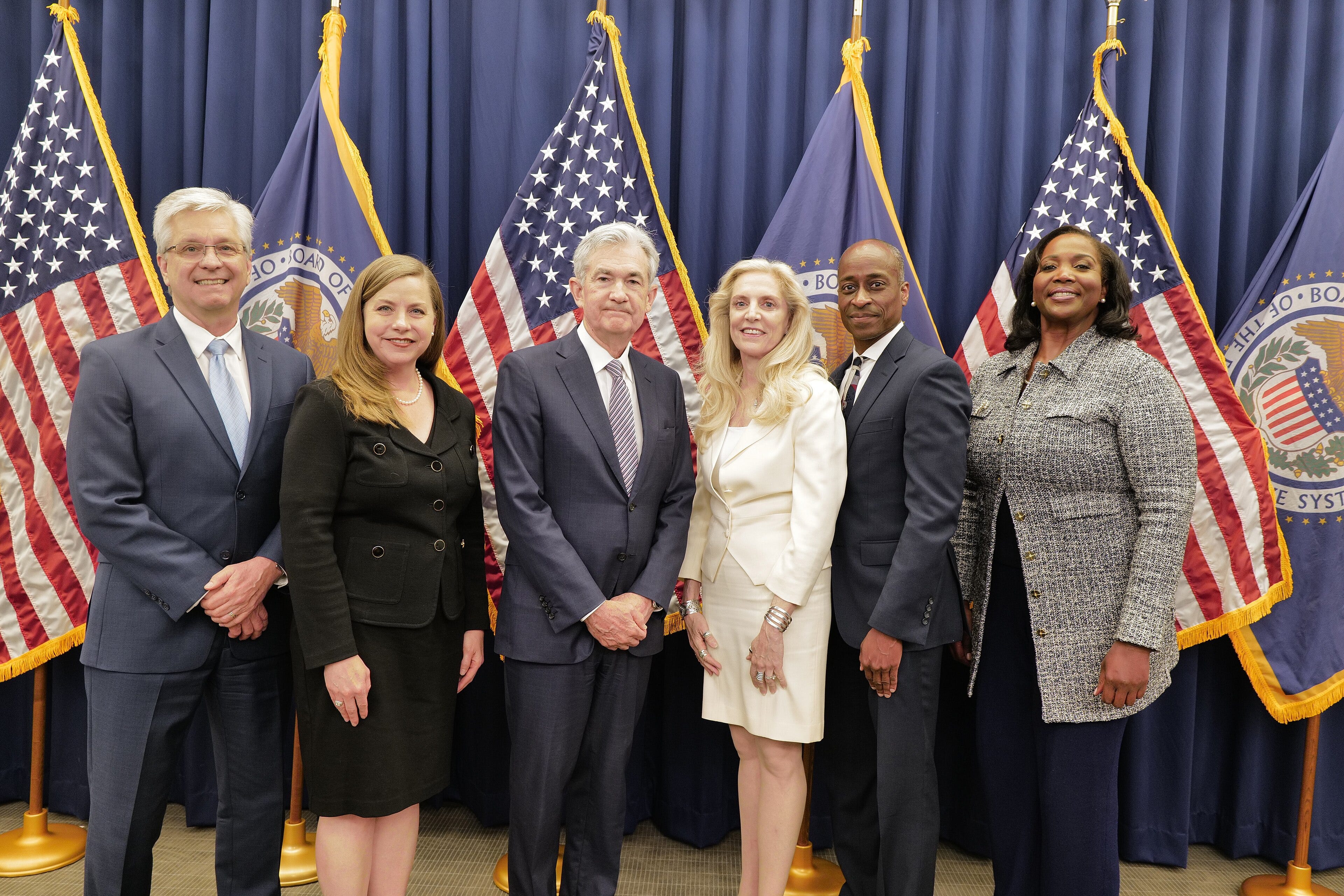
President Trump had a mixed day Monday at the Supreme Court, losing an effort to immediately remove a Federal Reserve governor while winning a landmark constitutional ruling that sharply expands presidential authority over independent regulatory agencies.
In the first decision, the court refused to lift a lower court order blocking Mr. Trump’s attempted removal of Federal Reserve Board Governor Lisa Cook, concluding the administration had not shown it was likely to prevail.
At the same time, the court handed Mr. Trump a sweeping victory by overturning longstanding limits on presidential authority to remove members of the Federal Trade Commission, overruling much of the court’s 1935 decision in Humphrey’s Executor v. United States.
Writing for a five-justice majority in the Cook case, Chief Justice John Roberts said the administration failed to demonstrate it properly removed Ms. Cook under the Federal Reserve Act’s requirement that governors be dismissed only “for cause.”
Writing that Congress created the Federal Reserve as an independent central bank insulated from political pressure, he said the “for cause” standard must reflect that independence and rejected the administration’s argument the president’s decision was effectively unreviewable. The opinion also said Ms. Cook was entitled to notice of the allegations. “At minimum, Cook was entitled to some explanation of the evidence at issue, some avenue for a response, and a deadline by which a response would be due,” Mr. Roberts wrote.
The court stressed it was deciding only whether the injunction should remain in place during litigation and did not finally resolve whether sufficient cause exists to remove Ms. Cook.
Justices Sonia Sotomayor, Elena Kagan, Brett Kavanaugh, and Ketanji Brown Jackson joined the chief justice’s opinion. Mr. Kavanaugh and Ms. Jackson each wrote separately. Justice Clarence Thomas dissented, while Justice Samuel Alito, joined by Justice Neil Gorsuch, filed a separate dissent. Justice Amy Coney Barrett also dissented.
Mr. Thomas argued the majority improperly allowed Ms. Cook to remain in office after her removal: “The Court’s decision is incorrect. Cook’s office was not her ‘property’ because, in this country, government officials do not own the public offices in which they serve.” He added, “Apparent mortgage fraud was a ‘cause’ to remove Cook,” and the governing statute “does not require notice and a hearing.”
Mr. Trump responded on Truth Social: “The Cook Lawsuit, having to do with her suitability in sitting on the Board of the Federal Reserve, was sent back by the Supreme Court on a strictly procedural basis, we will take appropriate action immediately to make sure that someone who has committed wrongdoing will not be making vital decisions concerning the Welfare of the United States of America!”
In Trump v. Slaughter, however, the court ruled 6-3 that statutory protections preventing presidents from removing Federal Trade Commission members except for cause violate the Constitution’s separation of powers.
Again writing for the court, the chief justice said Article II vests executive authority in the president alone and requires that officials exercising executive power remain accountable through presidential supervision and removal.
“We hold that such protection from removal is contrary to the separation of powers enshrined in the Constitution,” Mr. Roberts wrote.
The case arose after Mr. Trump dismissed FTC Democrats Rebecca Slaughter and Alvaro Bedoya early in his second term without invoking the statutory grounds of inefficiency, neglect of duty, or malfeasance. Ms. Slaughter challenged her removal after Mr. Bedoya later resigned, leaving only her claims before the court.
The majority concluded the FTC now exercises substantial executive authority through rulemaking, investigations, and civil enforcement, placing it squarely within presidential control.
The 1935 case arose after President Franklin Roosevelt removed Commissioner William Humphrey in 1933. When Humphrey died five months later, his estate sued the U.S. government for back pay. Mr. Roberts said the decision no longer fit modern constitutional doctrine.
“If anything more is left of Humphrey’s, the Court overrules it,” he wrote.
The opinion said the Constitution’s text and historical practice and the court’s decision in Myers v. United States require that executive officers remain removable by the president at will.
Justice Sonia Sotomayor, joined by Justices Elena Kagan and Ketanji Brown Jackson, said the majority discarded decades of constitutional practice protecting independent agencies.
“Today, this Court undoes centuries of political practice and concludes that all three branches of Government have been acting in open defiance of the Constitution all this time,” Ms. Sotomayor wrote. “Its conclusion is wrong.” She also warned the ruling “gives the President a power unknown even to the English Crown against which the Founders revolted.”
The majority emphasized the Federal Reserve presents different historical considerations and said questions involving the central bank were not before the court.
Mr. Trump celebrated the Slaughter ruling on Truth Social, calling it a “BIG WIN.”
“This Decision was long sought by United States Presidents, dating all the way back to the 1930s,” he wrote. “It is such an Honor to be the sitting President who won this Historic and Unprecedented Ruling, one of the most important ever given with respect to Presidential Powers.”


