Trump Energy Department Seeks To ‘Permanently End’ Appliance Mandates
The administration says energy-efficiency rules restrict choice and raise prices.
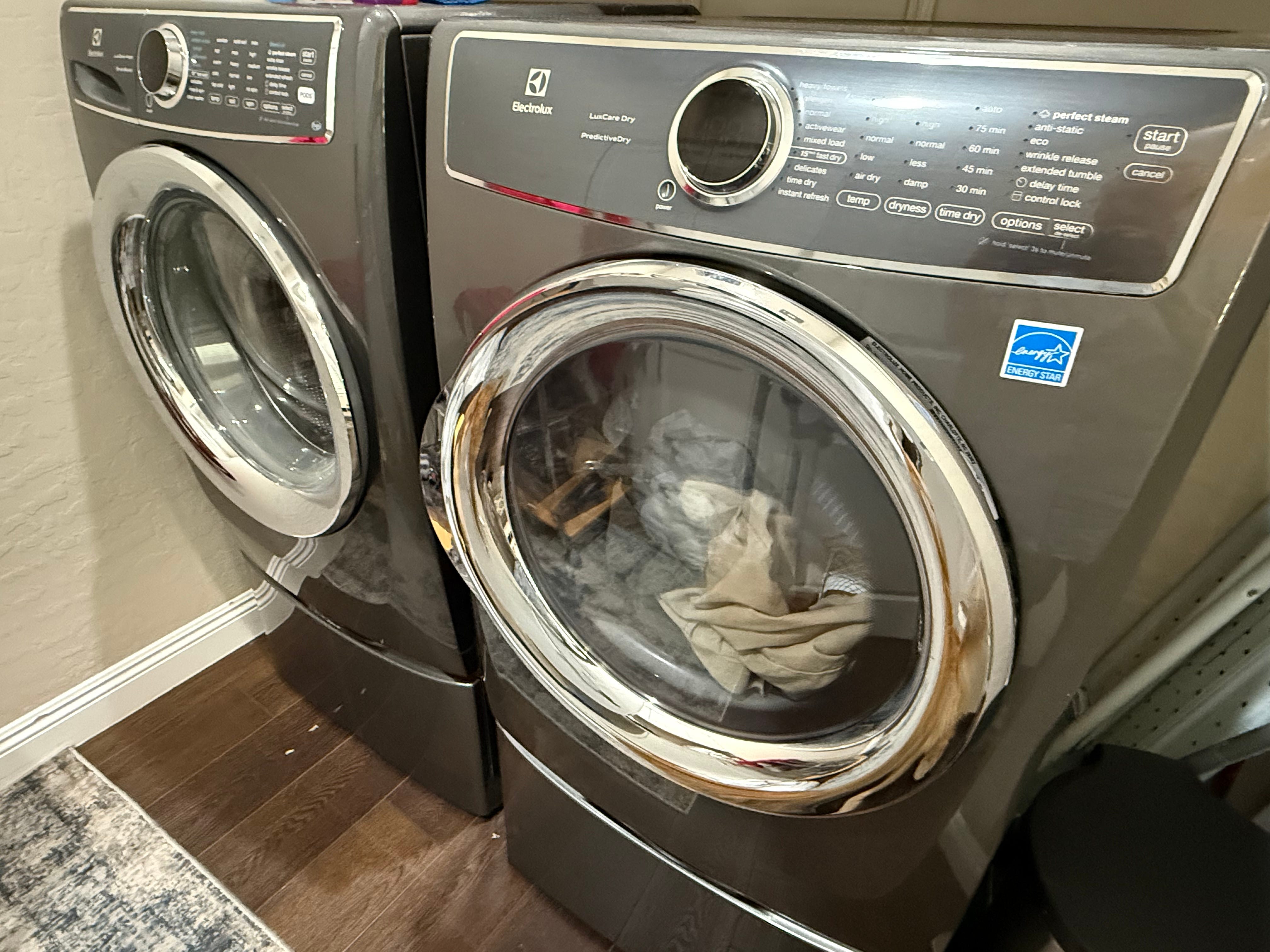
Consumers wrung out by so-called “high-efficiency” washers and dryers that don’t perform like older models may soon have an incandescent light at the end of the appliance-standard tunnel.
The U.S. Department of Energy formally proposed binding changes Tuesday to how it writes efficiency rules, part of the Trump administration’s move to “permanently end” federal appliance and equipment mandates it says restrict consumer choice and raise costs.
In a notice published in the Federal Register, Energy proposed revisions to its “Process Rule,” the internal procedures that govern how it sets and revises energy-conservation standards and test procedures for household and certain commercial products.
The agency also issued a separate request for information on its analytic methods for evaluating costs and benefits, beginning a review of how it determines whether new standards are economically justified.
The proposed changes would reverse the flexible, guidance-style approach Energy adopted under President Joe Biden, making the Process Rule binding again for actions that could lead to more stringent energy-conservation standards or test procedures.
The proposal would add an explicit definition of “significant energy savings” as a threshold for considering new or tighter standards, a concept that was central to a 2020 revision that made it harder to advance rules with modest projected savings.
Energy has cast the initiative as part of President Trump’s broader effort to roll back what he calls “Green New Scam” mandates. The department said the proposal is intended to “permanently end home appliance and equipment mandates that raise costs and disrupt consumer choice” and to safeguard consumers’ “freedom to choose from a variety of goods and appliances.”
Energy Secretary Chris Wright said the changes are designed to protect consumers from regulations that alter product performance. For too long, he declared, Americans have “paid the price for mandates that restricted consumer choice and drove up costs,” describing the proposal as a cost-saving measure aligned with Mr. Trump’s opposition to efficiency requirements for items such as low-flow fixtures and high-efficiency appliances.
The revised Process Rule would restore step‑by‑step comparative analysis of potential standard levels and reemphasize statutory factors such as effects on consumer-operating costs, product utility and performance, manufacturer impacts, and competition. It would also reinstate language requiring “clear and convincing evidence” before Energy sets certain commercial standards above levels adopted by the American Society of Heating, Refrigerating and Air‑Conditioning Engineers.
The proposal leans on the Supreme Court’s recent Loper Bright ruling, which scrapped four decades of Chevron deference and told judges to decide for themselves what ambiguous laws mean rather than taking an agency’s word for it. Under Chevron deference, if a statute is unclear, courts would uphold a federal agency’s reasonable interpretation of that statute.
Energy says the ruling supports a narrower reading of its authority under the Energy Policy and Conservation Act and justifies returning to the 2020 process framework that constrained when and how it can tighten standards.
Consumer and environmental advocates have warned that such changes could create an “obstacle course of restrictions” for future efficiency rules, though the notice itself focuses on statutory criteria and procedural requirements.
The accompanying request for information on Energy’s analytic methods seeks comment on how the department should identify market failures, assess consumer behavior, and model uncertainty when determining whether standards are economically justified.
The department points to National Academies of Sciences recommendations that urge it to present distributions of costs and benefits and make explicit any assumptions that consumers undervalue future energy savings.
While the administration positioned the moves as beneficial to consumers, the Appliance Standards Awareness Project, an energy-conservation group, said the proposal would add obstacles for future administrations seeking their own revisions.
Andrew deLaski, the group’s executive director, told The Washington Star, “This recent proposal from the Department of Energy would add new hurdles to strengthening energy efficiency standards as technology continues to improve. The impact of this proposal is that it could cost consumers money on their energy bills.”
He said “more efficient window air conditioners are generally quieter and provide more consistent temperatures than less efficient models,” and Consumer Reports testing has shown top-loading washing machines that are more energy efficient “generally wash clothes more effectively.”
But Kelly Mariotti of the Association of Home Appliance Manufacturers said the administration is on the right track in delivering the proposed Process Rule.
But, she added, the rules are variable depending on the administration in power, “creating the kind of uncertainty and instability that makes it difficult for manufacturers to plan, invest, and innovate.”
A solution, Ms. Mariotti said, would be for Congress “to amend the Energy Policy and Conservation Act and lock these reforms into statute.”