

Trump Administration Proposes Faster Discipline, Removal Process for Federal Workers
Americans have until August 3 to comment.
President Trump’s administration wants to make it easier and faster for federal agencies to say “You’re fired” to underperforming workers and demote employees who fail to meet requirements.
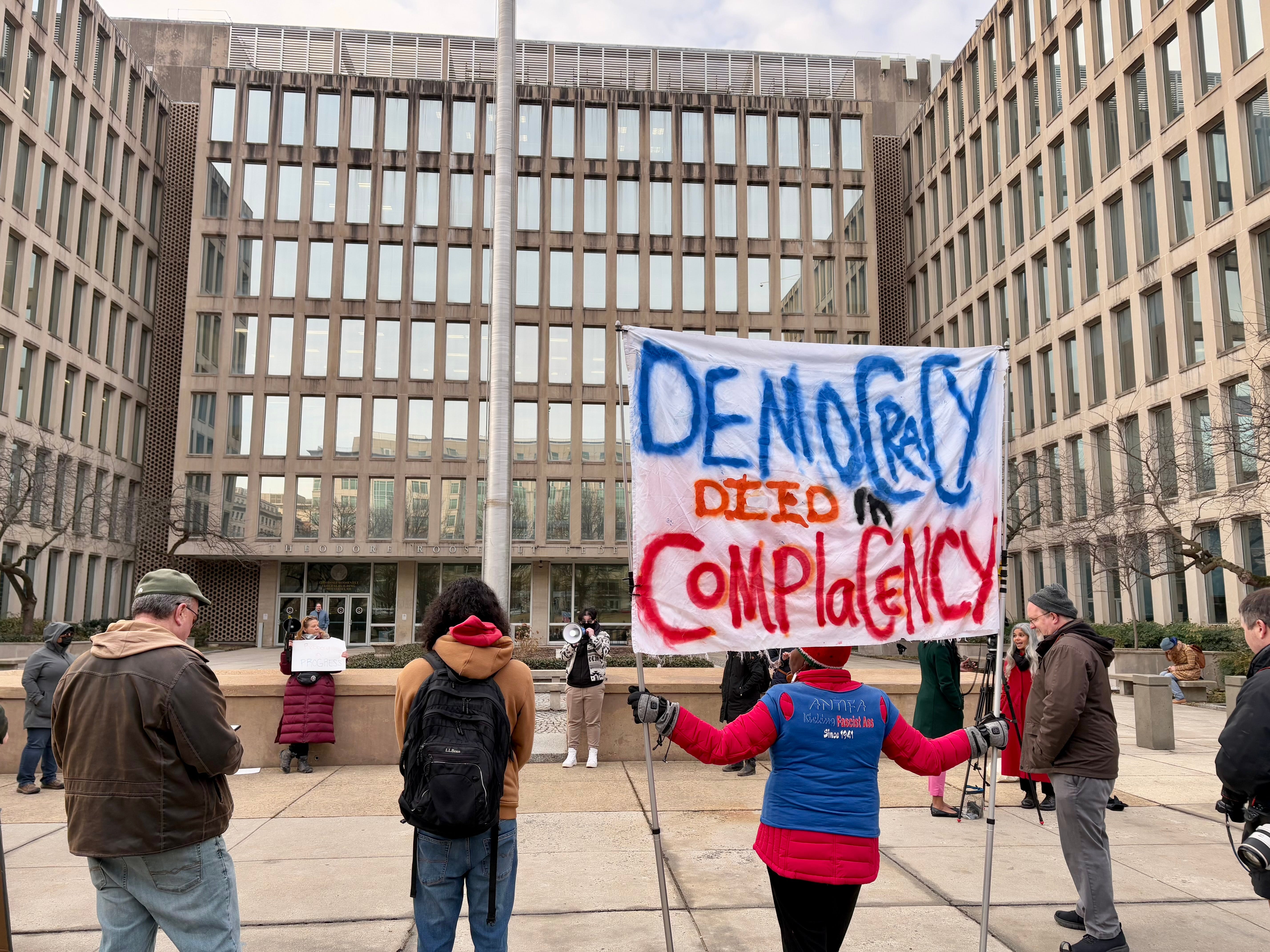
The American Federation of Government Employees, the sector’s largest union, slammed the July move as “a coordinated campaign targeting federal workers and their rights” that would “unravel nearly 50 years” of precedent that worked for employees, agencies, and taxpayers.
The Office of Personnel Management and Merit Systems Protection Board jointly published the proposed rule, Promoting Employee Accountability, in the Federal Register this month. Public comments are due August 3.
The regulation would generally limit an employee’s opportunity to demonstrate acceptable performance to 30 calendar days. It also would direct agencies, when practicable, to issue decisions on proposed removals within 30 days after an advance-notice period ends.
Employees facing performance-based removal generally would receive seven to 10 calendar days to answer an agency’s decision. If they don’t raise medical issues that may have affected their performance in their response, they waive the ability to do so, except where a statute prohibits such a waiver.
The rule also would prohibit federal employees serving as union representatives from using taxpayer-funded union time to represent workers in certain disciplinary proceedings. Employees could represent themselves or retain outside counsel.
OPM said taxpayers should not subsidize employee opposition to proposed removals. The agency estimated taxpayer-funded union time cost more than $207 million in fiscal year 2024, up from $135 million five years earlier.
Another major change would end the board’s use of the 12 factors established in a 1981 Merit Systems Protection Board decision, Douglas v. Veterans Administration, when reviewing whether an agency’s disciplinary penalty was reasonable. Those factors include the seriousness of misconduct, an employee’s disciplinary history, past performance, length of service, and potential for rehabilitation.
The board instead would examine whether a penalty falls within “the tolerable limits of reasonableness” under the “totality” of the circumstances. No particular set of factors would have to be considered in every case.
OPM Director Scott Kupor said the existing process has become too complicated and inefficient.
“When employees are unable (or unwilling) to perform their responsibilities and when given an opportunity to correct their behavior and demonstrate satisfactory performance remain unable to do so, leaving them in the organization jeopardizes the fundamental success of the entire team,” Mr. Kupor wrote. “That serves nobody well and the American people are worse for the wear.”
AFGE, which represents 820,000 workers in the federal and District of Columbia governmenta, condemned the proposal.
“Our current rules are designed to ensure that all workers are treated fairly and that all agencies act lawfully, impartially, and consistently when proposing to discipline employees,” Everett Kelley, national president, said. “The administration’s proposed rules would do the opposite — opening the door to politically or personally motivated actions that will undermine the integrity of our nonpartisan civil service.”
The National Active and Retired Federal Employees Association said the proposal would expedite removals and prohibit informal steps before a formal performance-improvement period.
It additionally would bar “clean record” settlements that erase or alter documentation of poor performance or misconduct. OPM acknowledged that restriction could make settlements more difficult and delay resolution of some cases.
OPM estimated the regulations would increase covered terminations or removals by 20 percent, producing about 599 additional actions and 366 additional MSPB initial decisions annually. More than 80 federal agencies would have to revise policies and procedures.
Pew Research Center reported in March the federal workforce shrank by 10.3 percent in 2025, a net decline of nearly 238,000 workers. A total of 348,219 people quit, retired, were laid off, or otherwise left federal employment, while 116,912 people began working for the federal government.
 | A guest post by
|