

Trump Administration Asks Supreme Court To Keep White House Ballroom Under Construction
The government says the East Wing project includes national-security needs.
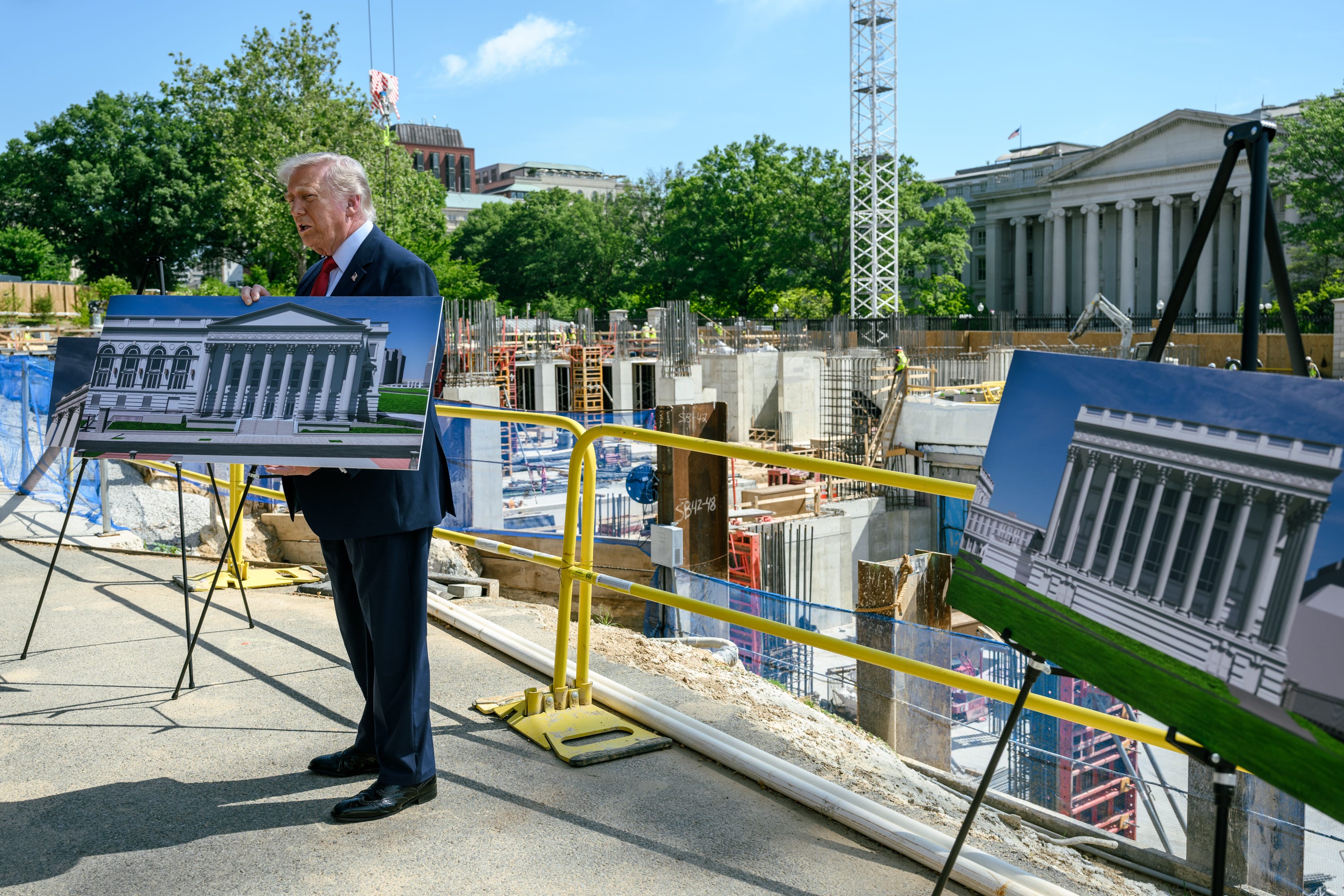
The Trump administration asked the Supreme Court Friday to prevent an injunction from halting construction of what it calls an “integrated military complex” at the White House’s East Wing, including a 90,000-square-foot ballroom.
Solicitor General D. John Sauer requested an immediate administrative stay while the justices consider the government’s application for broader relief. The injunction will take effect August 21 unless the Supreme Court intervenes.
The government said the project includes a highly secured ballroom and national-security facilities intended to protect the president, senior officials, and foreign dignitaries.
“This case involves an extraordinary and unlawful injunction that will halt the ongoing construction of the integrated military complex, including a totally secure ballroom space, at the East Wing of the White House, which is vitally required by national security,” the application states.
The filing says the complex extends five stories underground and incorporates hardened concrete, steel and rebar, missile-resistant structural components, and drone-proof roofing. It also includes bomb shelters, medical facilities, military-grade ventilation, sniper nests, and a rooftop drone port. The government says the ballroom is integrated into those security systems.
“It is, in a very large way, a ‘safe room’ for the Presidency and the continuity of government,” the application states.
President Trump announced the East Wing project in July 2025, and construction began October 20. The government says approximately $400 million in private donations are funding the ballroom, without taxpayer dollars.
The National Trust for Historic Preservation sued December 12, after removal of the old East Wing. A federal district judge initially rejected the organization’s requests for emergency relief before later issuing a preliminary injunction.
The revised April 16 injunction permits below-ground construction and work “strictly necessary” for White House security. However, permitted construction cannot determine the above-ground ballroom’s size and scale.
The U.S. Court of Appeals for the District of Columbia Circuit administratively stayed that order while considering the government’s appeal.
A divided appeals panel affirmed the injunction August 7 but stayed its ruling for two weeks, creating the August 21 deadline for Supreme Court action.
The administration argues the National Trust lacks constitutional standing because its case relies on objections from member Alison Hoagland, an architectural historian who expects to dislike the project. The government characterizes her claimed injury as the “subjective displeasure” of a passerby and says such aesthetic objections cannot establish a concrete injury permitting federal litigation.
The administration also says Congress authorized the project through laws permitting presidential “alteration” and “improvement” to the White House and authorizing federal construction within national parks.
The D.C. Circuit majority disagreed, concluding neither statute authorized a major construction project of this kind. Judge Neomi Rao dissented, calling the injunction “a blatant abuse of discretion.”
The government argues stopping construction now would cause substantial security and practical problems. A 250-person crew is working 20 hours daily, seven days a week, the government says, and the entire project is 65 percent complete, with a structure extending five stories underground and 70 feet above ground.
“[I]f work is stopped in line with the district court’s injunction, it will be a disaster,” the director for White House Management and Administration said in a declaration.
The administration says the unfinished structure itself could create security risks and operational problems for the Secret Service.
It also cited the assessment of military and security officials, including the secretary of the Army, who “recommends immediate completion of the White House East Wing construction as designed to mitigate identified threat vulnerabilities and resolve what is fundamentally a defensive posture emergency.”
A Secret Service assessment quoted in the filing states: “Every day added to the Project is another day impairing full security.”
The government is asking the justices to stay the injunction while it prepares a petition for a writ of certiorari seeking Supreme Court review of the underlying dispute.
It argues the case presents issues extending beyond the ballroom, including presidential authority over the White House and the judiciary’s role in decisions involving presidential security. “The extraordinary irreparable injuries to the government dwarf the subjective visual interests of the Trust’s single observer,” the application states.
 | A guest post by
|