
Supreme Court Upholds Mississippi’s Five-Day Absentee-Ballot Window in Federal Elections
President Trump decried the decision.
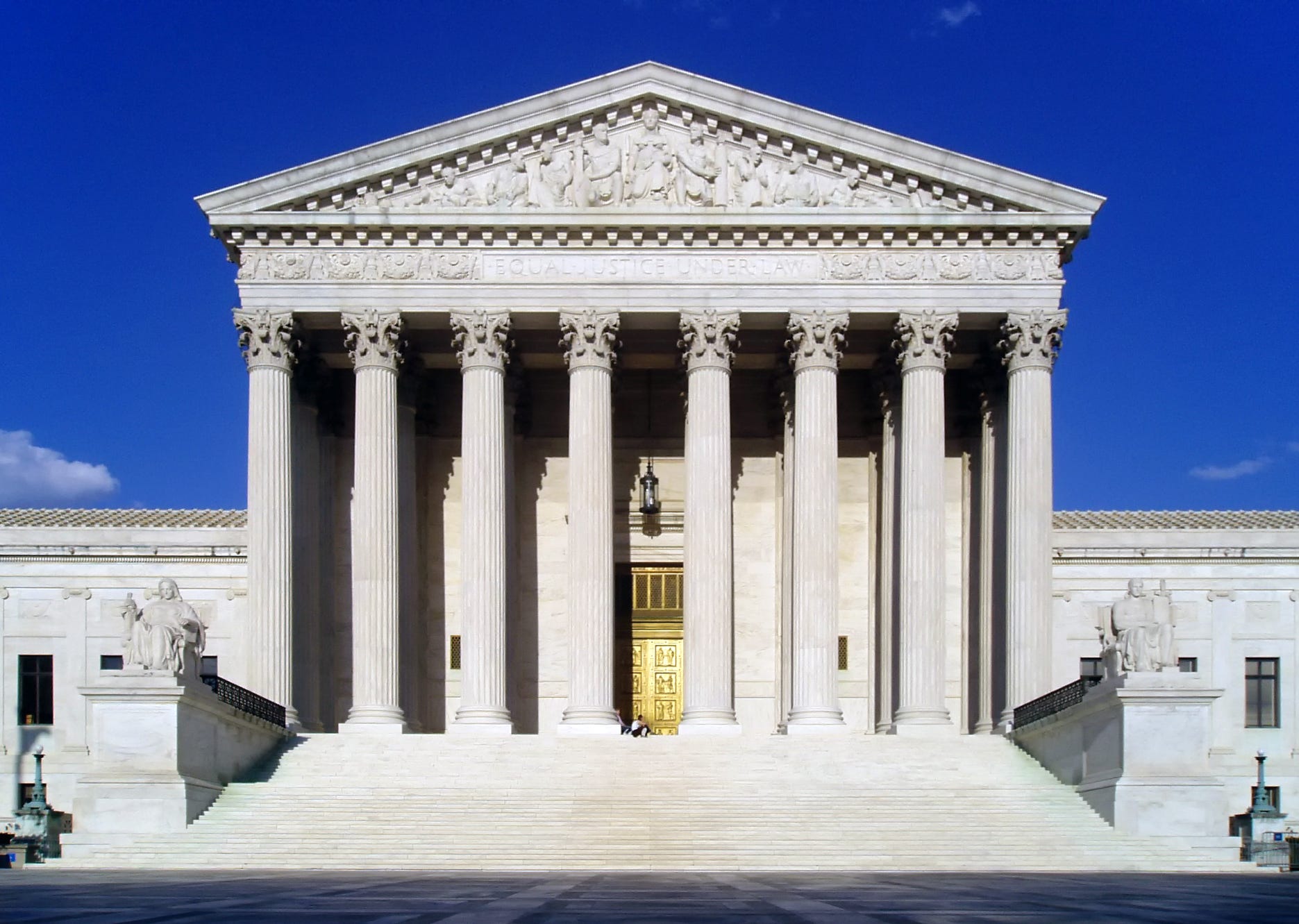
The Supreme Court upheld Mississippi’s absentee-voting law Monday, allowing mail ballots postmarked by Election Day to be counted if they arrive within five business days post-election. In a 5-4 decision in Watson v. Republican National Committee, the justices reversed a 2024 Fifth Circuit ruling that the deadline conflicted with federal law.
Writing for the majority, Justice Amy Coney Barrett said federal election statutes do not require ballots to be received by Election Day and do not bar states from counting those arriving shortly afterward.
President Trump quickly denounced the ruling on social media as a “tremendous loss in the Supreme Court today concerning Voter’s Rights,” adding that “it is more important than ever to pass THE SAVE AMERICA ACT,” the Safeguard American Voter Eligibility Act. The measure, which might be tacked onto a budget-reconciliation bill to avoid Senate cloture rules, would require photo identification to vote and proof of citizenship to register to vote. Mail-in ballots would only be allowed for illness, disability, military deployment, or travel.
“There is no excuse for a politician, or otherwise, to be against the above three requirements. There is only one reason to oppose — CHEATING! The House of Representatives has approved this vital Act, THREE TIMES. The United States Senate seems unable to do so,” Mr. Trump wrote.
California Attorney General Rob Bonta, meanwhile, lauded the decision: “In an important win for democracy and the right to vote, the U.S. Supreme Court has rejected the Republican Party’s attempt to restrict mail voting and upheld state laws providing for mail-in ballots timely cast on or before Election Day to be counted when they arrive after Election Day.”
Ms. Barrett said the case turned on whether federal election laws require ballots to be received by Election Day, not on the legality of absentee voting or counting ballots afterward. Citing historical dictionaries, precedent, a 2022 statutory amendment, and the Uniformed and Overseas Citizens Absentee Voting Act, she concluded Congress imposed no nationwide receipt deadline/ “The electorate’s choice is made when voting is complete, not when ballots are received,” she wrote. She also rejected arguments that 19th-century election practices controlled the modern statutes, saying the challengers failed to tie those practices to the federal text.
Justice Samuel Alito, joined by Justices Clarence Thomas and Neil Gorsuch and largely by Justice Brett Kavanaugh, dissented, arguing an election is not complete until all ballots are received. Citing “two centuries of historical practice,” early legal authorities, and a 1944 Montana decision rejecting soldier ballots received after Election Day, he warned the ruling invites fraud concerns and could further erode public confidence in elections.
The majority read that Montana case differently, saying it turned on state law and treated ballot receipt as governed by state, not federal, statutes.
The ruling returns the case to the Fifth Circuit for further proceedings consistent with the Supreme Court’s opinion, leaving Mississippi’s absentee-ballot rules in place for upcoming federal elections.
Unaddressed by the court is a U.S. Postal Service rule effective December 24, 2025, that defines a postmark’s meaning in the Domestic Mail Manual: Postmarks applied at retail units show the date a mailpiece was accepted there, while those applied at processing centers show “the date of the first automated-processing operation performed on that mailpiece,” which may be the day a ballot is deposited in a collection box or a subsequent day.
USPS did not immediately respond to The Washington Star’s comment request about the Supreme Court ruling.


