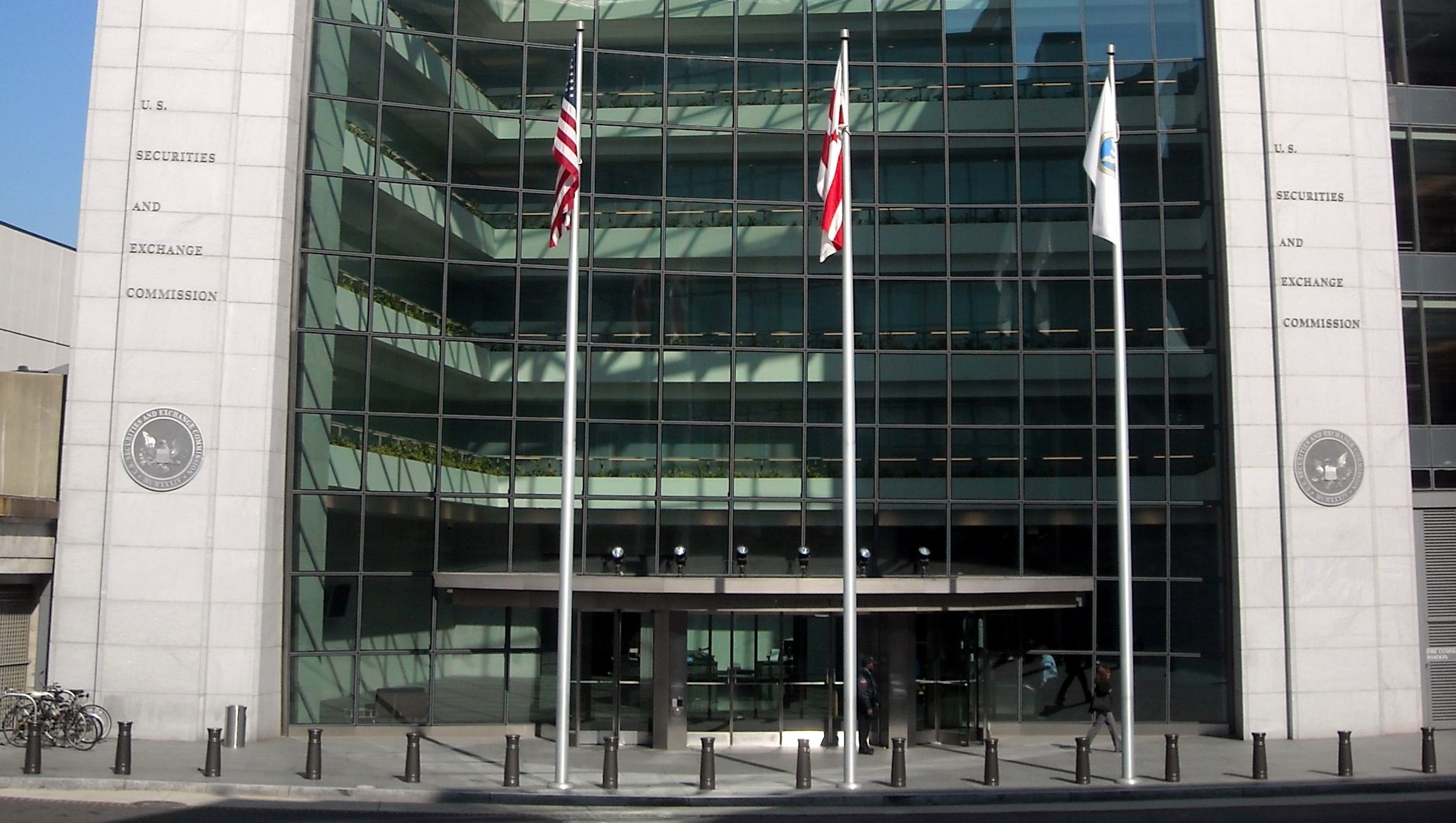
SEC Considers Tamping Down Woke Capital
The Securities and Exchange Commission is discussing regulation on the country's top investment firms today.

A populist-conservative advocacy group is pressing federal regulators to address the power the nation’s biggest investment firms are using to impose woke policies on American corporations — just as a Securities and Exchange Commission committee meets Thursday to discuss the issue.
The chances of regulatory action are “very high,” Bull Moose Project President Aiden Buzzetti tells The Washington Star.
It could have a big effect. About 41 percent of 401(k) assets are invested in funds indexed to the stock market, and up to 95 percent of the retirement-savings plans offer such a passive-investment fund.
Bull Moose wants the SEC to require passive-investment managers to cede direct control over proxy voting and instead allocate those votes based on active shareholders’ preferences. It says the top three asset-management giants — BlackRock, Vanguard, and State Street — use “stewardship committees” to advance environmental, social, governance and diversity, equity, inclusion agendas through companies’ shareholder votes. Those policies, it notes, can hurt shareholder returns, and many passive investors, such as Americans with retirement accounts, are unaware of how votes are cast.
The group cites a 2021 episode in which a “tiny environmentalist hedge fund” holding 0.02 percent of ExxonMobil shares secured three board seats with backing from the so-called Big Three firms, which are the largest shareholder of almost 90 percent of S&P 500 companies. Without that support, Bull Moose says, the directors would not have been elected.
BlackRock supports 74.7 percent of shareholder resolutions at Chinese companies that align with Chinese Communist Party policies, while Vanguard and State Street back 1.51 percent and 0.04 percent respectively, according to a March piece on the Oxford Business Law Blog.
The SEC’s Investor Advisory Committee is considering draft recommendations to improve the proxy-voting system Thursday, including allocating passive investors’ votes in proportion to ballots cast by active investors.
Bull Moose says the system gives disproportionate influence to stewardship committees that vote shares in passive-index funds on behalf of millions of investors. Those firms control an estimated $20 trillion to $30 trillion in assets. More than half of American households own mutual funds.
Bull Moose’s May report “The Corporate Voting Cartel: How to Stop Wall Street Weaponization of Americans’ Retirement Portfolios” says the concentration of voting power allows ESG priorities to influence corporate decision-making beyond what many investors would support. The Big Three cast proxy votes affecting thousands of publicly traded companies.
Its proposed remedy is “mirror voting,” in which passive-fund stewardship teams would not vote shares directly. Votes would be allocated proportionally based on how active shareholders vote on a proposal. “A passive investor’s shares should reflect the preferences of active investors rather than the preferences of a small group of stewardship professionals,” the report argues.
Mr. Buzzetti says many Americans invest through passive funds expecting managers to maximize returns rather than pursue broader policy objectives.
“People are relying on these asset managers to make investments and make them money on their behalf,” he tells the Star. “They’re not supposed to be paying attention.” Passive investors often do not know how stewardship teams vote their shares. Mirror voting, he says, would align those votes with the preferences of shareholders who actively participate in corporate governance.
Recent regulatory and legislative actions have sought to limit the influence of proxy advisers and reshape shareholder proposal rules. President Trump issued a December executive order pushing back on “woke capital.” It targeted proxy-adviser firms, which Bull Mouse says are big drivers of the political weaponization of Wall Street.
Mr. Buzzetti sees growing political momentum behind more reforms. “Every indication that we have from the current administration tells us that if there is a way to rein in this consolidated corporate power and to do so in a way that benefits the American people, they will do it,” he says. Bull Moose is pushing for a followup executive order encouraging SEC guidance. “Passive, mirror-based investment strategies should take a passive, mirror-based approach to voting as well,” its report declares.
The proposal has drawn criticism from some quarters.
Corey Frayer, director of investor protection at the liberal Consumer Federation of America, says the report conflicts with some asset managers’ efforts to give investors more direct control over proxy-voting decisions.
“The Bull Moose Project admits in its own report that it opposes shareholder democracy programs offered by asset managers that allow individual investors — the owners of the company — to make their own decisions by voting their own shares,” Mr. Frayer tells the Star. “The Bull Moose Project thinks shareholders are so ignorant and easily influenced they need the federal government to step in to make their decisions for them.”
Mr. Buzzetti rejects that characterization, saying the scheme would not prevent investors from voting or participating in corporate governance.
“We’re not saying people can’t vote,” he says. “We’re saying that the passive shares need to reflect the way people are voting.”
He acknowledges mirror voting would not eliminate attempts to influence shareholders. Active investors could still be persuaded by advocacy groups, companies, or other interested parties. But he says the proposal would remove “a very significant lever of power” from large asset managers and proxy advisers.
BlackRock and State Street spokespersons declined to comment to The Washington Star on the subject of mirror voting. Vanguard did not respond to a request for comment.