Pope Leo’s AI Encyclical Is Only Half Finished
The Catholic Church chief is missing a huge artificial-intelligence danger.
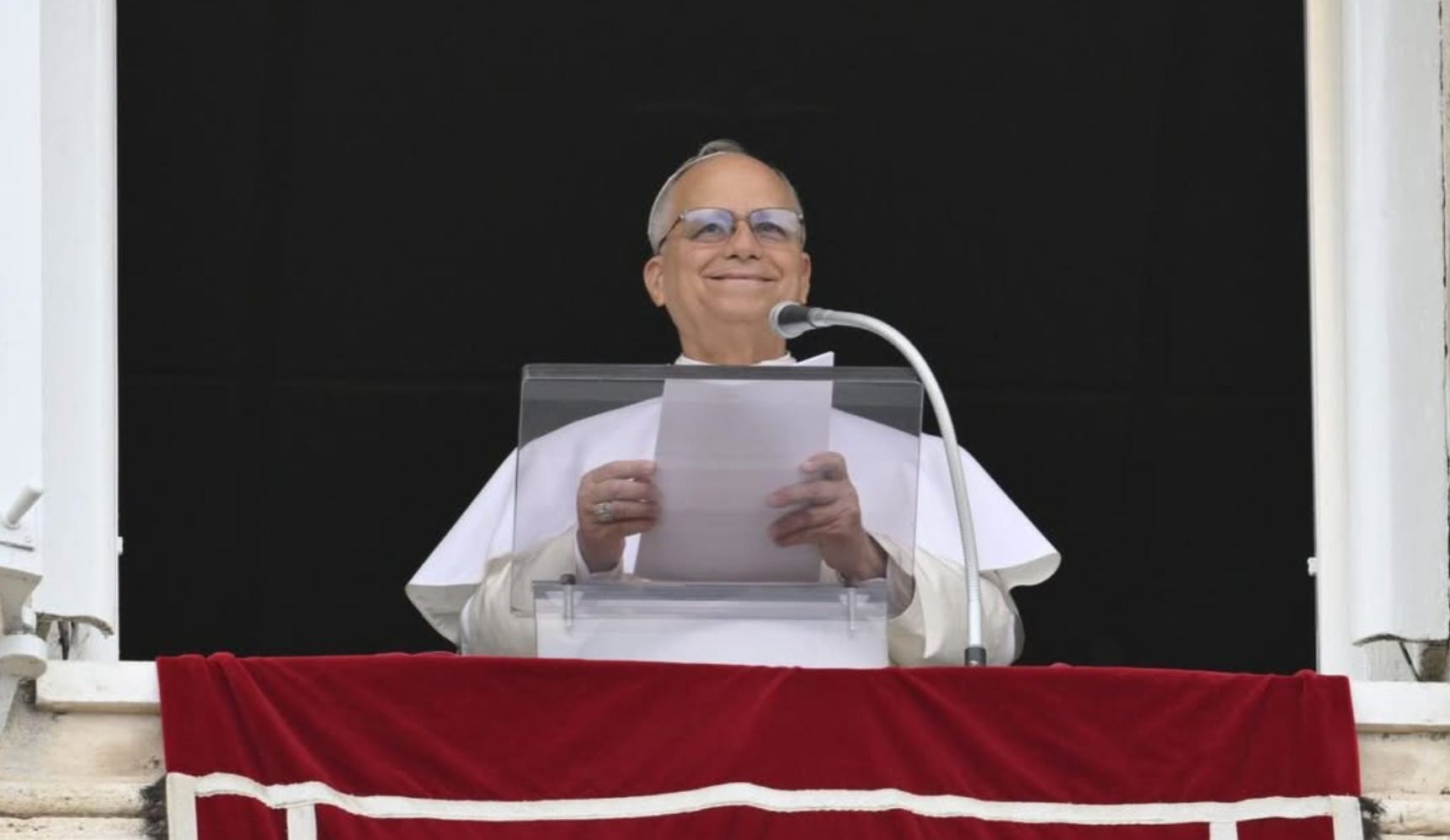
Pope Leo XIV has sent a message to the world with his new encyclical, “Magnifica Humanitas.” Unfortunately, it’s not the message the world needs to hear.
I say this as a faithful Catholic who has spent nearly two decades studying, and striving to apply, the church’s teaching on economics in the modern world. For more than a century, Pope Leo’s predecessors refused to accept the false binaries that dominate public thinking on tough and timely topics. Instead, they forced a perspective that transcends the politics of the day, pointing toward a real path toward human flourishing. Pope Leo is trying to build on this tradition, to the point that he signed “Magnifica Humanitas” on the 135th anniversary of the papal document that began this beautiful and countercultural trend.
Yet unlike his predecessors, Pope Leo tacitly accepts — or at least doesn’t refute — the false binary of the day. He powerfully argues that the unconstrained development of artificial intelligence presents tremendous risk to human dignity. Yet his primary solution is governmental in nature: “robust legal frameworks” and “a political system that does not abdicate its responsibility are required.” The difficulty with this analysis is that while AI certainly has the potential for abuse, there is an equally large potential for abuse by bureaucracies and politicians acting in the name of society’s protection. A more nuanced take is needed, one that recognizes how governmental control can also injure human dignity while stifling AI’s productive development.
There is much to celebrate within this encyclical. Pope Leo’s extension of the universal destination of goods to include the new forms of digital property is worthwhile doctrinal development. His diagnosis that the locus of power over everyday life has shifted toward transnational private actors is a serious and defensible claim. But “Magnifica Humanitas” seeks to build on encyclicals that go so much further precisely because they took a more holistic view of modern problems.
In “Rerum Novarum” — the encyclical issued 125 years before Pope Leo XIV signed “Magnifica Humanitas” — Pope Leo XIII railed against the abuses of industrial capitalism before turning with equal seriousness to the socialist response then on offer. Forty years later, Pope Pius XI did the same in “Quadragesimo Anno,” criticizing the concentrations of capital that had produced the Great Depression and the totalitarian responses sweeping Europe. And in 1991, Saint John Paul II brought this symmetry to its modern apex. Written as Soviet collectivism was collapsing, “Centesimus Annus” named the errors of “real socialism” and then turned with the same analytical rigor to the dangers of what the future Catholic saint called “a radical capitalistic ideology.” Time and again, the popes rejected the false binary.
Why not Pope Leo XIV? It is indeed problematic if a minuscule number of private firms exclusively shape what billions of people see, learn, and do. But it’s no less problematic if expert bodies, regulatory agencies, and transnational government entities manage the development of artificial intelligence without meaningful input or guidance from those same billions of people. Both approaches are distant from ordinary life — a violation of the Catholic principle of subsidiarity — and both face the same temptation to downplay human dignity and agency. Yet only one gets the papal treatment.
Pope Leo names the opacity of private algorithms but is silent on the opacity of public ones. He calls for corporate transparency, independent checks, equitable access, and avenues for recourse without acknowledging that government actors are strongly incentivized to reject these very things, entrenching incumbents and excluding exactly the distributed, decentralized, community-anchored AI development Pope Leo wants. The Holy Father criticizes the technocratic paradigm in private hands without acknowledging that technocracy has at least as long and as troubling a history in public hands.
None of this is to say Pope Leo gives the “wrong” answer. Rather, he’s given a solution that’s incomplete, unlike the answers previous popes gave in similar documents. As a result, the people most likely to cite “Magnifica Humanitas” are not faithful Catholics trying to think through their relationship with new technology. They are politicians, bureaucrats, and lobbyists in Washington, Brussels, and capitals across the world. They will find in it a moral grounding for the dramatic expansion of government power at the expense of individual freedom and human flourishing — a situation Pope Leo surely does not intend.
I hope “Magnifica Humanitas” is an isolated departure from papal encyclicals. I hope Pope Leo’s next document can restore the balance that has powerfully — and rightly — defined such documents for more than a century. Artificial intelligence is full of promise and pitfalls, and if the Catholic Church hopes to illuminate the best path for this advanced technology, its leader must acknowledge the dangers posed by private and public actors alike.
Chris Koopman is CEO of the Abundance Institute.


