Might Russia Scare Moldova Into Reuniting With Romania?
Your guide to what's news in foreign affairs — and why it matters.
The one certainty the past couple decades has delivered to Black Sea nations is that their vulnerability to Russian “incursions” into their countries is directly proportional to their moves toward membership in the NATO alliance or the European Union.
Moldova, Georgia, and Ukraine bear significant scar tissue and loss of territories to Russian aggression under the guise of “protecting Russian-speaking populations.” Moldova has an estimated 1,500 Russian soldiers stationed in the “internationally unrecognized Kremlin-aligned Republic of Transnistria,” as Deutsche Welle put it.
But that may change if Moldova’s reunification with Romania becomes a reality — providing NATO Article 5 security protections.
“Romania’s lower house of parliament has automatically advanced a bill declaring that Romania and neighboring Moldova should become a single sovereign state and calls for negotiations on unification,” reports Poland’s TVP World.
In the balance: Admission into NATO and the EU is a deliberate, cumbersome, and prolonged process. Moldova applied for EU membership March 3, 2022. The European Council granted it candidate status June 23, 2022, with a target date for EU accession in 2028.
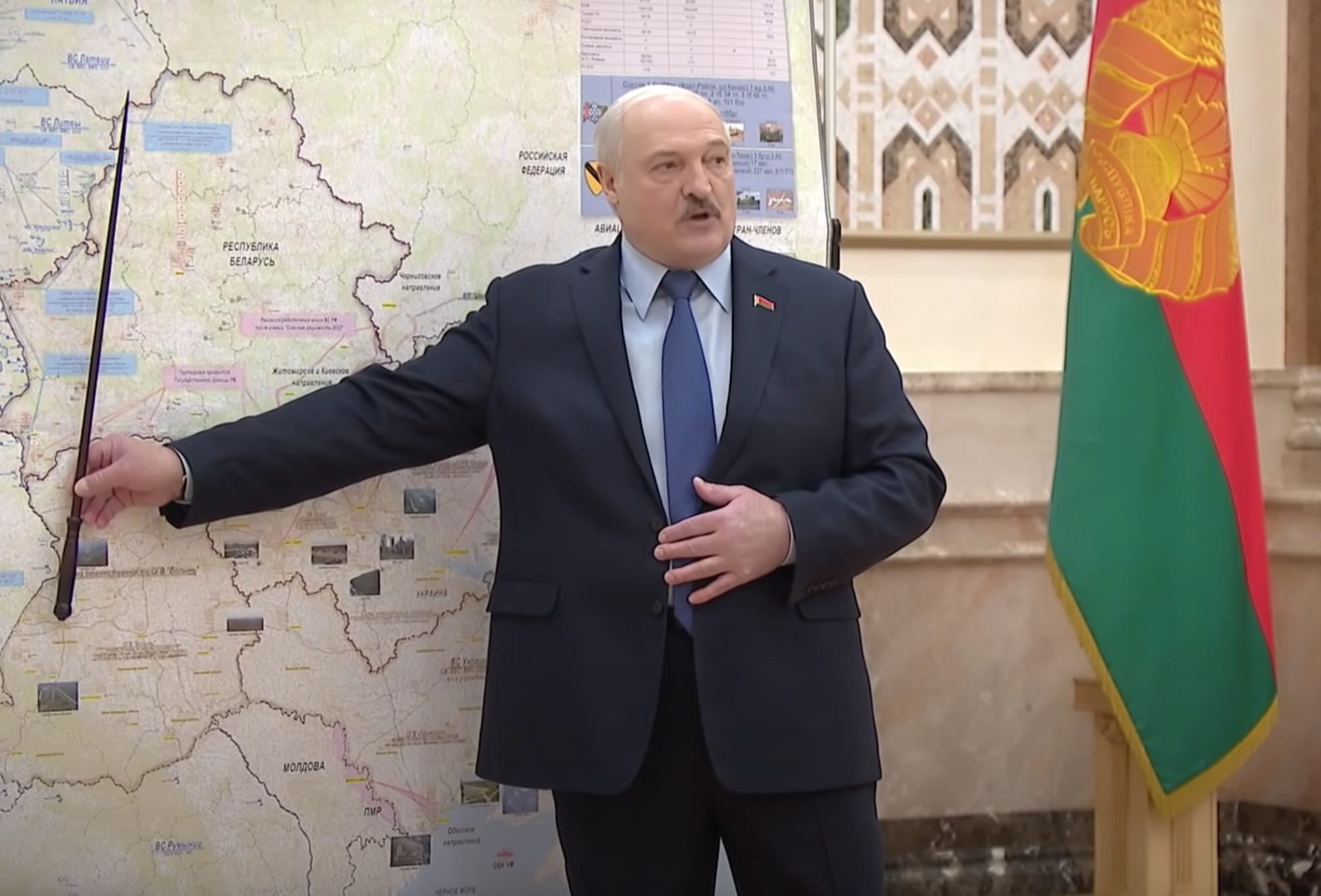
If Russia were to prevail in Ukraine, Moldova would likely be its next victim. That was made clear in March 2022 when Belarusian President Alexander Lukashenko, speaking to his security council, stood in front of a map showing Russia’s apparent plan to invade Moldova.
Moldovan President Maia Sandu told British podcast “The Rest Is Politics” in January that she would vote to reunify with Romania if the issue ever goes to a referendum: “It is getting more and more difficult for a small country like Moldova to survive as a democracy, as a sovereign country, and of course to resist Russia.”
Romanian Prime Minister Ilie Bolojan also said he would vote yes in a referendum for unification.
The two countries share a common language, history, and culture. Moldova was part of Romania from 1918 to 1940, when it was annexed by the Soviet Union. Moldova declared its independence from the USSR in August 1991. Following the Soviet dissolution, the Russian government formally recognized Moldova’s independence in December 1991.
Decision point: Protection from Russian military aggression for Moldova can only come from NATO Article 5 security guarantees — or from the Kremlin’s defeat in Ukraine and its subsequent withdrawal from the country. The quickest method to acquire those guarantees is reunification with Romania. Almost half of the Moldovan population holds a Romanian passport — to include Ms. Sandu.
But a poll conducted in June 2025 found that 62 percent of Moldovans would vote against unification, with only 28 percent supporting it. For now, an independent nation outweighs reunification with Romania, with most Moldovans favoring EU membership instead.
That could change if Russia were able to secure the Donbas region and threaten Odesa and Kyiv.
The Romanian government tends to agree — the senate voted down a similar bill in 2023. Its stated priority is Moldova’s path towards EU membership, adding that parliament cannot mandate negotiations or the signing of treaties in the way proposed.


