

Lindsey Graham, 71, Dies From ‘Sudden Illness’
A scramble for his South Carolina Senate seat is likely.
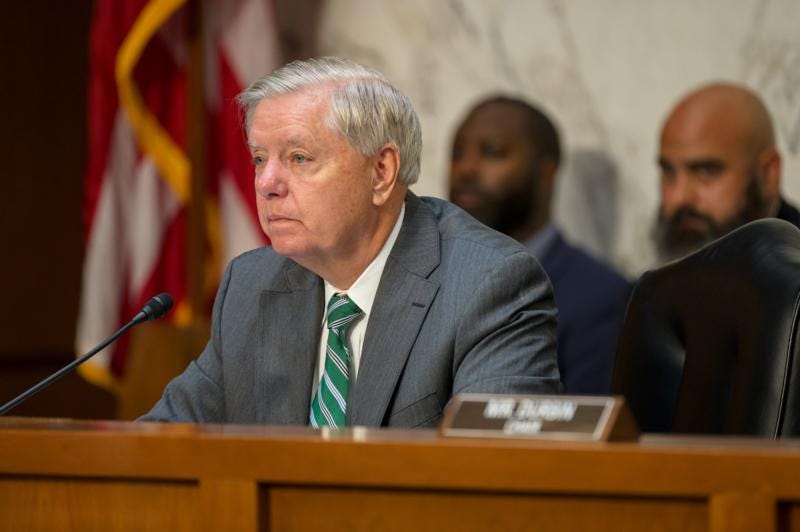
South Carolina Republican Senator Lindsey Graham, 71, has died.
“On the evening of Saturday, July 11, U.S. Senator Lindsey Graham passed away from a brief and sudden illness,” his office said. “Senator Graham’s family appreciates prayers at this time and asks for privacy during this incredibly difficult period.”
Emergency medical services were called to Mr. Graham’s Capitol Hill home Saturday night for a cardiac arrest, but no other details were disclosed, NBC News reports.
President Trump confirmed the lawmaker’s death in a Truth Social post: “Senator Lindsey Graham, one of the greatest people and Senators I have ever known, is dead! He was always working, and was a true American Patriot. Lindsey will be greatly missed!!! DETAILS AND ARRANGEMENTS TO FOLLOW. So sad!”
Mr. Graham, the Senate Budget Committee chair, was poised to lead the Judiciary Committee in the next Congress should the GOP hold the upper chamber. He met Friday with Ukrainian President Volodymyr Zelensky in Kyiv. He had been scheduled to appear on NBC’s “Meet the Press” Sunday, the network said.
First elected to the Senate in 2002, Mr. Graham was seeking a fifth term this fall. He sought the 2016 Republican presidential nomination and criticized Mr. Trump vociferously — voting for independent Evan McMullin — but became a staunch supporter after a March 2017 meeting.
He was elected to the House of Representatives in 1994.the first Republican voted in from South Carolina’s third district since 1877.
Mr. Graham noted July 6 Iranian signs targeted him for assassination. “At least they used a good photo of me,” he quipped.
“Lindsey Graham is irreplaceable,” South Carolina Governor Henry McMaster said early Sunday. “The fiercest of fighters for South Carolina and America — and a loyal and steadfast friend. We grieve with Darline, his family and his devoted staff. May God hold him gently in the palm of his hand. We shall not see his likes again.”
Senate Majority Leader John Thune, South Dakota Republican, said, “My heart is heavy this morning to learn of the passing of my friend and colleague.”
“He was a strong advocate for the United States and a strong ally to freedom-loving countries across the globe,” he added. “He was a trusted adviser and colleague to me and many others, and numerous presidents and heads of state have relied on his counsel. His influence on the federal judiciary, our national defense, and his beloved South Carolina will be felt for generations.”
Israeli Prime Minister Benjamin Netanyahu was among the first world leaders to remember the senator.
Mr. Graham “devoted his life to defending America, strengthening our alliance and standing up for the free world. Israel has lost one of its greatest friends. America has lost a great patriot. I have lost a beloved friend,” he said.
The sudden and unexpected loss of Mr. Graham throws his ballot slot into chaos.
If a South Carolina nominee dies 115 days before Election Day, state law requires the political party to fill the vacancy through a special primary rather than by executive committee appointment. The filing period opens on the second Tuesday after the candidate’s death and remains open for one week. A special primary is held on the second Tuesday after filing closes, with a runoff two weeks later if no candidate wins a majority.
Also unknown in the overnight hours is who will replace Mr. Graham on an interim basis.
South Carolina law authorizes the governor to fill a Senate vacancy caused by “death, resignation or otherwise.” The authority is consistent with the 17th Amendment, which permits state legislatures to empower governors to make temporary appointments until voters fill Senate vacancies. The appointee would serve until January 3.
South Carolina’s statute does not require Mr. McMaster to appoint a member of the deceased senator’s political party, does not require legislative confirmation, and does not impose a deadline for making the appointment.
Republican Tim Scott is now the senior senator from South Carolina.
 | A guest post by
|