

Justice Department, Synagogue Sue Montgomery County Over Firearms Ban at Houses of Worship
The Silver Spring Jewish Center brought in armed security after antisemitic attacks.
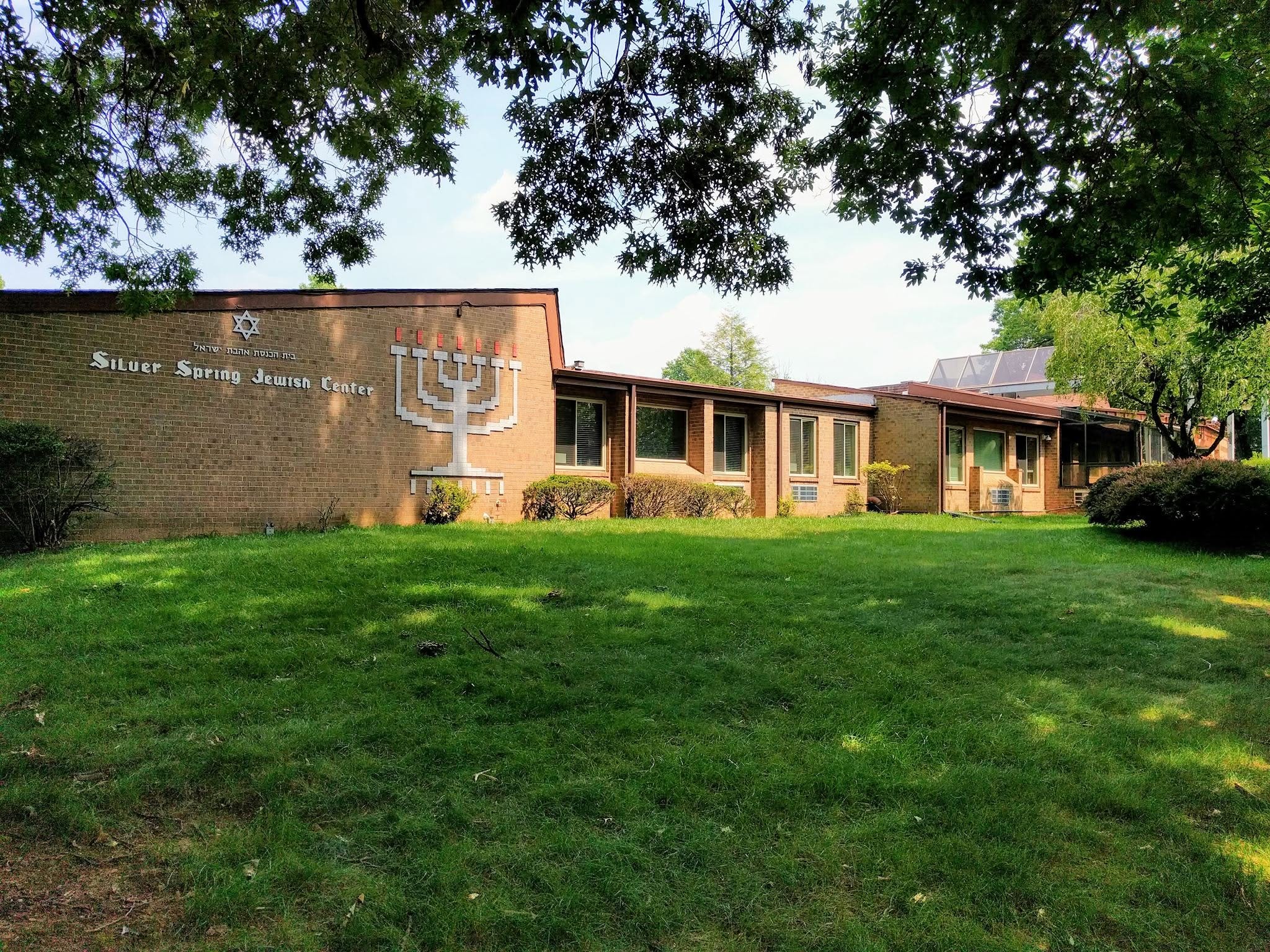
The Justice Department sued Montgomery County, Maryland, Monday, challenging a new firearms ban in and within 100 yards of houses of worship and other public gathering places.
The federal complaint followed a July 30 lawsuit by a Silver Spring synagogue and its rabbi seeking to halt enforcement of the restrictions. Rabbi Menashe Shapiro told The Washington Star the shul created a volunteer armed security team in response to increased antisemitism after Hamas’ October 7, 2023, massacre in Israel.
The Justice Department’s 18-page complaint, filed in the U.S. District Court for the District of Maryland, names Montgomery County, the county police department, the county sheriff’s office, and Sheriff Max Uy. It requests a declaration that enforcement of provisions it calls unconstitutional would violate federal law and preliminary and permanent injunctions barring enforcement.
The lawsuit invokes a federal statute authorizing the attorney general to seek equitable and declaratory relief against a pattern or practice of law-enforcement conduct that deprives people of federally protected rights.
“The United States brings this action to vindicate the constitutional rights of the law-abiding citizens of Montgomery County,” the complaint states.
At issue is Expedited Bill 23-26, which County Executive Marc Elrich signed July 27 after the County Council approved it July 21. Because it was expedited, the measure took effect immediately.
The law generally prohibits selling, transferring, possessing, and transporting firearms, ammunition, and major firearm components in or within 100 yards of a “place of public assembly.” That definition includes parks, places of worship, schools, libraries, recreational facilities, multipurpose exhibition facilities, certain government buildings, polling places, courthouses, and legislative assemblies.
The federal complaint does not challenge every location listed in the ordinance. It targets restrictions involving parks, places of worship, libraries, recreational facilities, and multipurpose exhibition facilities, along with the 100-yard buffer zones.
It also challenges the law’s restrictions on ammunition and major firearm components. The complaint argues the ordinance does not define “major components” and leaves people uncertain about which firearm parts are covered.
The department contends the law violates the Second Amendment and conflicts with the Supreme Court’s June 25 decision in Wolford v. Lopez. The court struck down Hawaii’s requirement that licensed firearm owners obtain express permission before carrying guns onto private property open to the public.
The high court said the Second Amendment protects “the right of Americans to carry arms for self-defense as they go about their daily lives.”
Montgomery County’s ordinance is more restrictive than the Hawaii law, the department argues, because it does not allow property owners to authorize lawful firearm carrying at covered locations.
“Bill 23-26 is breathtaking in scope,” the federal complaint states. “For all practical purposes, it prevents law-abiding citizens from carrying firearms as they go about their daily lives.”
The complaint cites county geographic data showing 605 houses of worship, 693 public parks, and 42 public recreation centers, among other locations. It also cites a map developed by plaintiffs in another legal challenge. The department says at least 10,000 parcels covering more than 7,900 acres, or more than 26 percent of the county, fall within covered locations before buffer zones are added.
“On information and belief, the law enforcement officers are fulfilling (and will continue to fulfill unless enjoined) their statutory duty to enforce the Unlawful Prohibitions,” the complaint states of county police and sheriff’s deputies. The department alleges that enforcement constitutes a pattern or practice of unconstitutional law-enforcement misconduct because it deprives people of Second Amendment rights.
The federal filing came four days after the department’s Civil Rights Division warned Mr. Elrich and three other county officials to suspend enforcement by noon on July 31 or face litigation.
“History teaches us that houses of worship are vulnerable to armed attacks and congregants are particularly in need of the ability to defend themselves,” Jonas Geissler, a deputy assistant attorney general, wrote in the letter. “By disarming religious congregants during worship, Montgomery County infringes on such congregants’ ability to defend against such attacks.”
Mr. Geissler is among the Justice Department officials listed in Monday’s complaint. The filing was also signed by Gregory Dolin, senior counsel in the Civil Rights Division’s Second Amendment Section.
The Silver Spring Jewish Center and Rabbi Menashe Shapiro made similar arguments in their July 30 lawsuit. They asked the same federal court for a temporary restraining order or preliminary injunction.
Represented by the New Civil Liberties Alliance, the synagogue and Mr. Shapiro contend the measure violates the First, Second, and 14th amendments by preventing congregants from providing armed security and interferes with sincerely held religious obligations concerning self-defense.
“The synagogue maintains a very robustly trained security team that is present, that knows the building, that knows the people, that is able to respond much faster than even a hired guard or than the police. From a security perspective, having people that are there and can respond in less than a second as compared to minutes is just very important,” Mr. Shapiro told The Washington Star.
“And religiously, our faith teaches us that you are obligated to provide for your self-defense, and all commandments should be fulfilled by you or by members of the community to the maximum extent possible,” he added.
The shul formed a volunteer armed security team following Hamas’ attack on Israel amid heightened concerns about antisemitic violence. Its court filings cite an October 2024 assault on a visibly Jewish congregant outside the synagogue and a June attempted break-in.
The synagogue says its volunteers include former military personnel who hold Maryland carry permits and train regularly, and the ordinance prevents them from serving as armed security.
Jacob Huebert, the New Civil Liberties Alliance’s senior litigation counsel, told the Star the measure could make congregations less safe.
“It makes these places much less safe because it tells would-be attackers that these people in the synagogues and churches, if they’re law-abiding, are going to be defenseless, whereas before they might have been able to defend themselves,” he said. “When you only say that people who are in the places of worship can’t have guns, it’s very clear that you’re just disarming people who might well need to be defended. And of course the synagogues in particular have a special need to be defended.”
Mr. Huebert added, “It’s great to see the Justice Department standing up for constitutional rights, and we will be happy to fight alongside its attorneys to end Montgomery County’s indefensible disarmament of religious people.”
The synagogue’s lawsuit also raises religious-freedom and equal-protection claims that do not appear in the Justice Department complaint.
“The Ban violates the Second Amendment on its face because it infringes on the right to keep and bear arms for self-defense and has no basis in our nation’s historical traditions,” a memorandum supporting the synagogue’s injunction request states.
The Star contacted a Montgomery County government spokesman for comment on the synagogue’s lawsuit and the Justice Department’s warning letter but received no response.
 | A guest post by
|