

JD Vance's Politicization of Foreign Policy Is Reckless
It was on full display during his interview with Joe Rogan.
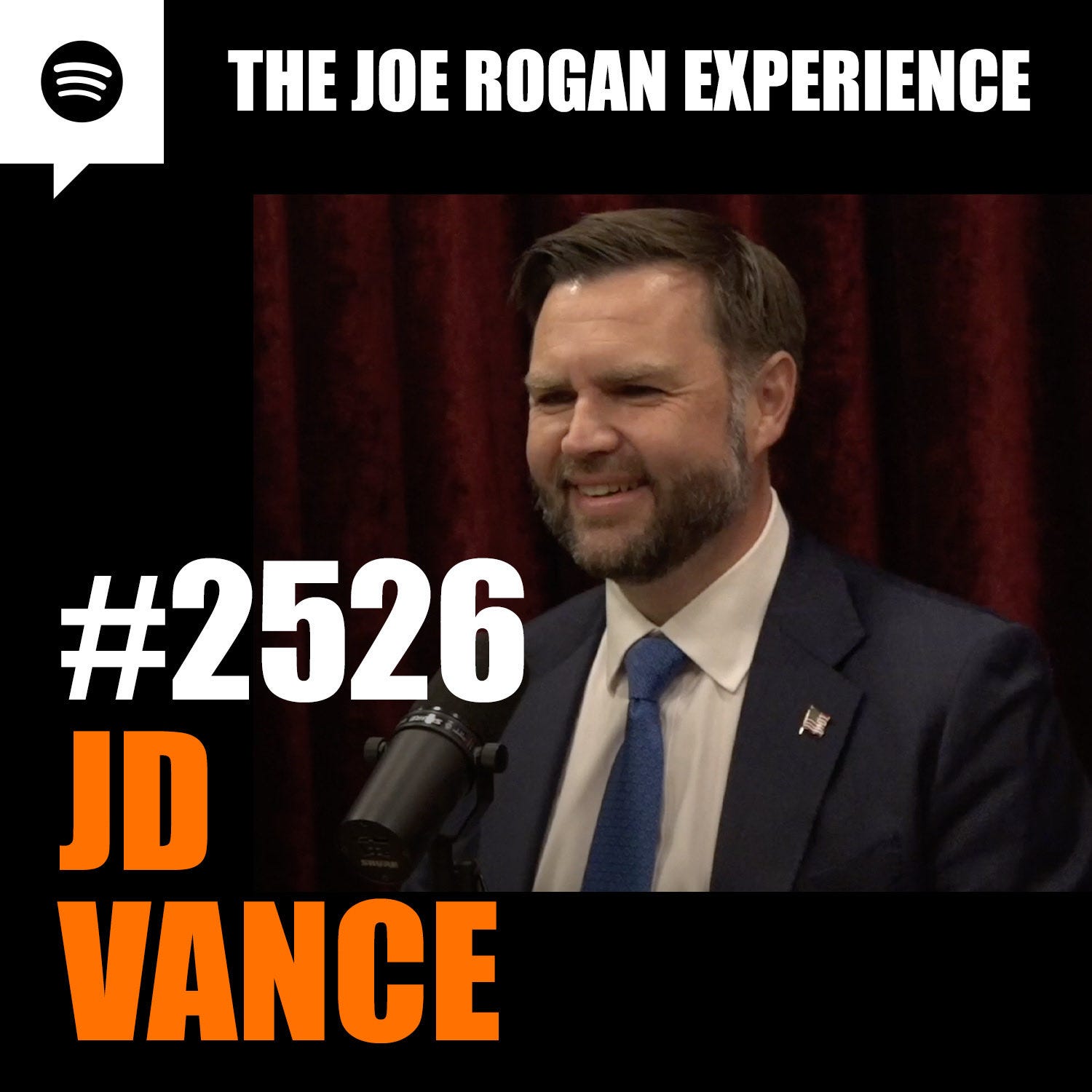
Vice President JD Vance’s ill-advised approach to U.S. foreign policy is certainly a novel one. His messaging to allies and enemies alike is seemingly primarily aimed at his political base.
He extends the hand of friendship to our enemies — including most famously Iran — and insults our allies be it a NATO member state, Israel, or Ukraine.
Others can analyze Mr. Vance’s domestic politics — that is not our lane let alone expertise — but suffice to say his politicization of foreign policy is reckless. It is also highly dangerous to U.S. national security and the country’s military-strategic partnerships.
We warned last month that President Trump has a JD Vance problem when it comes to foreign policy. After his vice president’s nearly three-hour interview with Joe Rogan, which was recorded Tuesday and released Wednesday, we can confidently assess it has gotten worse.
Mr. Vance, in part, crassly blamed domestic critics for undermining his work on crafting and securing the memorandum of understanding between the United States and Iran that Mr. Trump signed June 17 at the Château de Versailles.
Really?
If Mr. Vance is really interested in understanding who is undoing his “hard work,” he need look no further than to Brigadier General Ahmad Vahidi, the commander of the Islamic Revolutionary Guard Corps, and his fellow hardliners.
They played Mr. Vance first in Islamabad and later in Geneva — using Iranian Speaker of the Parliament Mohammad Bagher Ghalibaf and Foreign Minister Abbas Araghchi as tools — for a fool. The resulting memorandum did not fall apart because of U.S. critics.
It collapsed because it was overly vague and poorly negotiated by Mr. Vance, Steve Witkoff, and Jared Kushner. Iran viewed it as a document rewarding the regime with permanent control — if not sovereignty — over the Strait of Hormuz.
Nor was the deal doomed because of Israel as Mr. Vance implied during his interview with Mr. Rogan. Israeli Prime Minister Benjamin Netanyahu simply sees what we saw April 10: Mr. Trump’s ceasefire is on a path to nowhere.
Sorry not sorry, but Mr. Vance blaming Israel for his foreign-policy failure reeks of political convenience and contrivance designed to shore up his political base at the expense of a key U.S. wartime ally in the fight against Iran.
When it comes to the Islamic Republic, Mr. Vance’s naïveté is as stunning as it is glaring. Amjad Taha, an Emirati author, captured its essence in an X post Thursday: “Out of the 8.3 billion people on Earth, only one seems to trust Iran: JD Vance.”
Mr. Vance, bizarrely, is willing to put more trust in the nation’s enemies than in its allies. Iran gets it. Russian President Vladimir Putin gets it. China gets it.
For them, Mr. Vance’s gullibility is a godsend. It foolishly keeps buying American enemies time and opportunity to undermine — if not defeat — U.S. national security interests on a global basis.
In the balance: Fortunately, despite Mr. Vance’s bungling approach to foreign policy, Mr. Trump can still bank strategic U.S. national-security wins in Ukraine and Iran.
Ukrainian President Volodymyr Zelensky — whom Mr. Vance famously derided in the Oval Office in February 2025 — and his generals are slowly but surely strangling Russian occupation forces in the Crimean peninsula.
Likewise, as we noted today in The Hill, Ukraine is pressing its advantage in the Sea of Azov by damaging or sinking dozens of Russian shadow-fleet oil tankers attempting to resupply Crimea. The Institute for the Study of War pegs it at 90 plus.
Add to that the deep-fight campaign that is helping to cripple Russia’s oil and energy sector. As of today, Ukraine has struck all of the largest Russian gas refineries, including one as far away as Siberia.
Russia is hurting, and the win there is in the making if Mr. Trump — sans Mr. Vance — is willing to seize it.
Decision point: For now, however, Iran is the closest wolf to the shed that must be addressed. Ukraine is holding its own, and Mr. Trump’s decision to license Patriot technology to Kyiv is as welcome as it is encouraging.
Winning in Iran, though, likely means Mr. Trump getting Mr. Vance to stand down.
Instead, the president should rely more on Secretary of State Marco Rubio. He is clear-eyed when it comes to understanding Iran and the threat it poses to U.S. national security and the entirety of the Middle East.
This week, when a reported asked about Mr. Araghchi’s accusation at the United Nations that the United States and Israel are committing genocide, he responded: “The Iranian? He’s an expert in genocide. They’ve killed thousands and thousands of people. Look at the Middle East. Every problem in the Middle East tracks back to Iran. Hezbollah? Iran. Shia militias that are destroying and threatening Iraq? Iran. Hamas? Iran. The Houthis? Iran. Assad when he was in Syria? Iran. Everywhere you turn they’re behind all of it.”
Mr. Rubio did not conveniently blame Israel. He did not censure Americans for criticizing the memorandum. Nor did he naïvely offer Mr. Vahidi a hand of friendship.
Instead, he declared that Iran is “a destabilizing evil force that [has] to be dealt with.”
Exactly. Mr. Rubio understands what victory looks like and how to get there. Mr. Vance, simply put, does not.
 | A guest post by
|
 | A guest post by
|