

It Costs More To Permit Infrastructure Than To Build It — But One Lawmaker Wants To Change That
A newish senator sets his sights on slashing red tape.
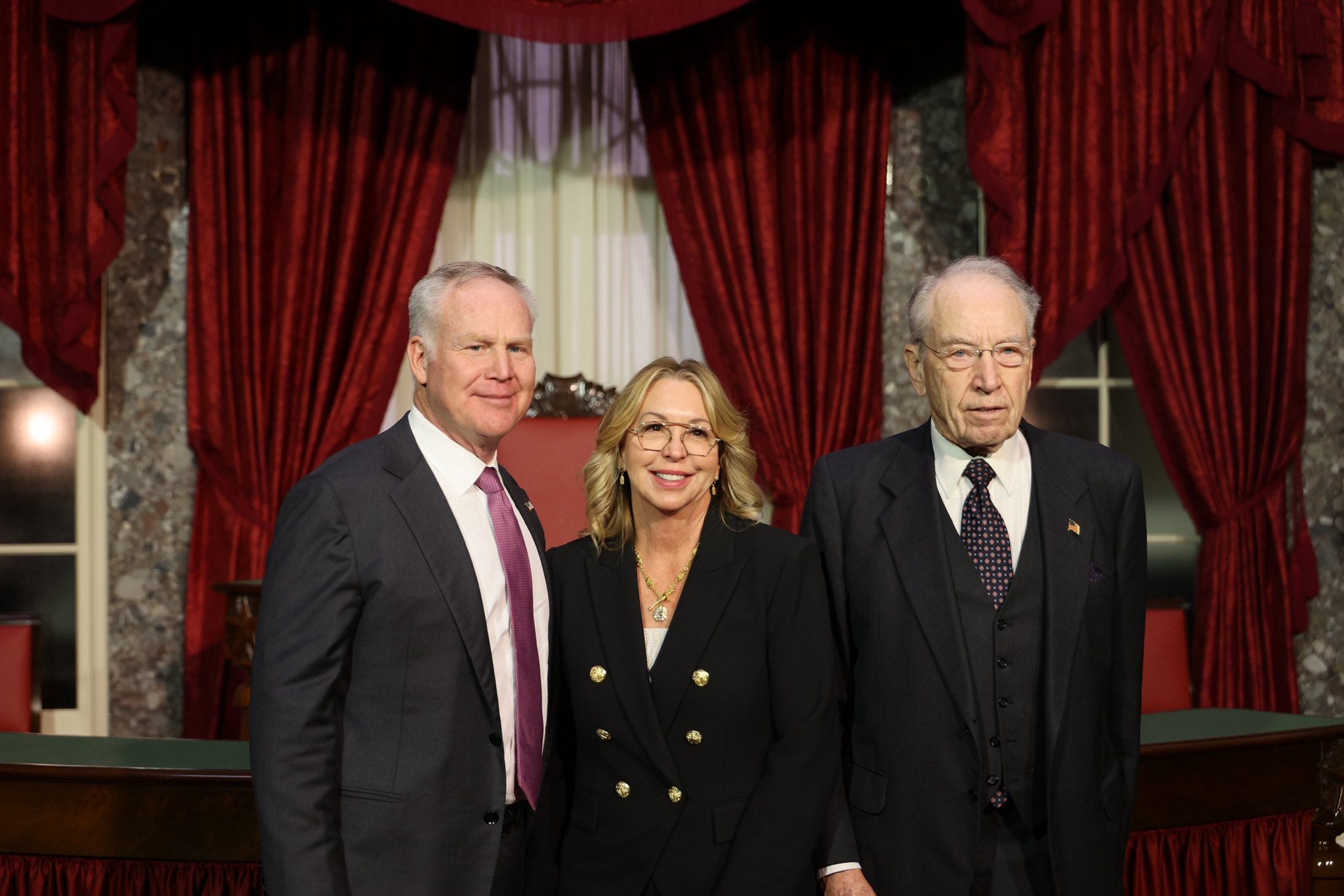
“A project we’re working on right now — the permitting cost is twice as much as we’re spending on the pipe. And this is if everything goes well.”
That was Alan Armstrong, then the CEO of Williams Companies and now Oklahoma senator, speaking last year at CERAWeek, the premier global energy conference. The head of a nearly $100 billion firm wanted the crowd to understand just how serious our permitting problem has become. When getting a government green light costs more than building, energy infrastructure crumbles and American prosperity, growth, and innovation take a big hit.
America has more energy resources than any nation on earth. What stops those resources benefiting consumers is a permitting system so broken that pushing paper is more difficult than digging mile-deep wells, scaling mountains with pipelines, or building a 40,000-square-foot refinery.
Yet unlike so many other business owners who have to accept the unreasonable price Washington charges to do business, Mr. Armstrong now has the rare opportunity to fix permitting delays with public policy.
Oklahoma Governor Kevin Stitt appointed him in March to replace Markwayne Mullin, now homeland-security secretary. As state law requires, Mr. Armstrong signed an affidavit pledging not to run for the seat. His appointment will lapse at the end of the year.
While he serves his nation, his only job is to fix the problem he described.
That abbreviated term is not really a limitation. It is a superpower. Mr. Armstrong has no reelection to worry about, no donor class to court, no political career to protect. He has a single mandate from his governor — permitting reform — and a ticking clock to deliver it. In Washington, where most senators spend their first year learning which hallway leads to the chamber, that combination of focus and freedom is extraordinary.
He got moving quickly. Within three months of his appointment, Mr. Armstrong introduced the American Energy and Mineral Infrastructure Act of 2026, backed by Senators Cynthia Lummis, Rick Scott, and Katie Britt.
The legislation does what Congress has talked about for years and never accomplished. It makes the Federal Energy Regulatory Commission the lead federal agency for interstate pipelines and liquified-natural-gas terminals, ending the possibility of a single state vetoing a federally approved interstate project. It reforms the National Environmental Policy Act to clarify it is a procedural statute, not a license for endless litigation. And it requires evidence-based environmental review, expands nationwide permits, and streamlines approvals for critical mineral mining on federal lands.
None of this removes environmental review. It restores the regulatory system to sanity, lowering costs and shortening the process by eliminating duplicative reviews and endless litigation.
Mr. Armstrong’s bill could not be more necessary. The average federal environmental review under NEPA takes roughly four years before a shovel hits dirt. According to McKinsey estimates, up to $1.5 trillion in project investment sits idle awaiting federal approval — investment that could add up to $2.4 trillion to gross national product if unleashed.
These numbers refer to real projects with real jobs and real economic benefits. The renewable-energy SunZia transmission line in the Southwest spent 17 years in permitting — nearly six times longer than actual construction. The Mountain Valley Pipeline was stonewalled by litigation for six years until Congress intervened directly to force completion.
Meanwhile, FERC’s own blanket-certificate program, which streamlines authorization for natural-gas infrastructure, operates under cost caps set in the 1980s. Construction costs have risen 268 percent since then; the caps have risen just 50 percent. As a result, nearly 40 percent of qualifying projects since 2020 have been shunted unnecessarily into longer review tracks.
These delays and ballooning costs have downstream effects in sectors where energy is needed most and urgently, especially when it comes to artificial intelligence. As then-CEO MR. Armstrong said at CERAWeek, “States friendly towards energy infrastructure are going to win the AI race.”
The data-center buildout that will power the next generation of artificial intelligence — with huge economic and security ramifications — requires enormous amounts of reliable electricity. Manufacturing reshoring demands the same. Every day of delay keeping natural-gas plants and transmission lines off the grid puts American states at a disadvantage. Companies that want to build quickly will migrate from one state to another, to other energy-rich nations like the United Arab Emirates, or to global competitors like China.
Mr. Armstrong has been candid that getting permitting reform right is harder than getting a bill passed. Other senators have labored on this issue for years, at times driven more by ego and special interests than a desire to get this unglamorous work done. But the underlying reality favors action. Permitting reform has more bipartisan support than almost any issue in Congress because the cost of inaction is paid by consumers through higher utility bills and lost jobs. Democrats and Republicans agree on little — but they all want to take credit for bringing down prices for their voters.
Mr. Armstrong’s temporary stint in the Senate could be just what the nation needs and just in time. If he succeeds — and the country should hope he does — he will have accomplished more in a few months than most senators manage in a full term: helping America build again.
Drew Bond is co-founder and executive chair of C3 Solutions.
 | A guest post by
|
Beg to differ. The permitting process is not broken. It is working exactly as intended never forget the green Marxists and their cronies in the democrat party hate free abundant energy in all its forms because they want to reduce the human population which they see as a virus. Deindustrialization is their goal just look at what is happening in Europe.