How Worried Should We Be About Russia's Plan To Test NATO Resolve?
Washington has warned Warsaw repeatedly about possible 'provocation.'
Washington recently warned Polish President Karol Nawrocki that “Russia is planning an armed ‘provocation’ on Polish soil to test NATO’s resolve,” The Telegraph reported this weekend.
The Kremlin’s goal, the paper said, would be to “undermine Polish sovereignty, expose NATO as a paper tiger, and force the withdrawal of Western support for Ukraine — all without triggering a conventional war with the alliance.”
Possible scenarios include Russian ballistic-missile and drone strikes on Polish “critical infrastructure, such as power stations, or simulated air strikes that would force Poland to activate its air defence systems.”
Russian or Belarusian soldiers could even make small ground incursions into NATO terrain, “presented by Russia as an accidental straying into Polish territory because of a GPS failure, or as a dubious rescue mission to retrieve a helicopter suffering from a malfunction.” The Kremlin would have to stage any ground-based scenarios from either Kaliningrad or Belarus.
Prime Minister Donald Tusk stated, “Poland is preparing very intensively for various scenarios. I don’t intend to frighten anyone, but the coming months, also because of the changing nature of the war in Ukraine, could be truly critical — particularly for the Baltic states,” Poland’s TVP World reports. “These concerns are real. Let’s not be afraid. We are preparing for various situations, but we cannot underestimate them.”
In the balance: There is cause for concern. As Polish Foreign Minister Radosław Sikorski noted, “Before Russia’s invasion of Ukraine, Russia attempted false-flag incidents to create a pretext for war. Regimes of this kind always behave that way.”
But this is not a false flag. It is an attempt to exert pressure upon NATO members to suspend their military assistance to Ukraine by demonstrating military capability. This is not your father’s Russia, however; this is a beaten-down version of the bear. After four-and-a-half years of sustained combat, 1.4 million casualties, and an inability to defend against Ukrainian drones, the Kremlin cannot afford to challenge NATO by threatening Poland — or the Baltic States for that matter.
Poland can act unilaterally or with Germany, with whom it signed a new bilateral defense agreement June 17, while NATO decides whether to invoke Article 5.
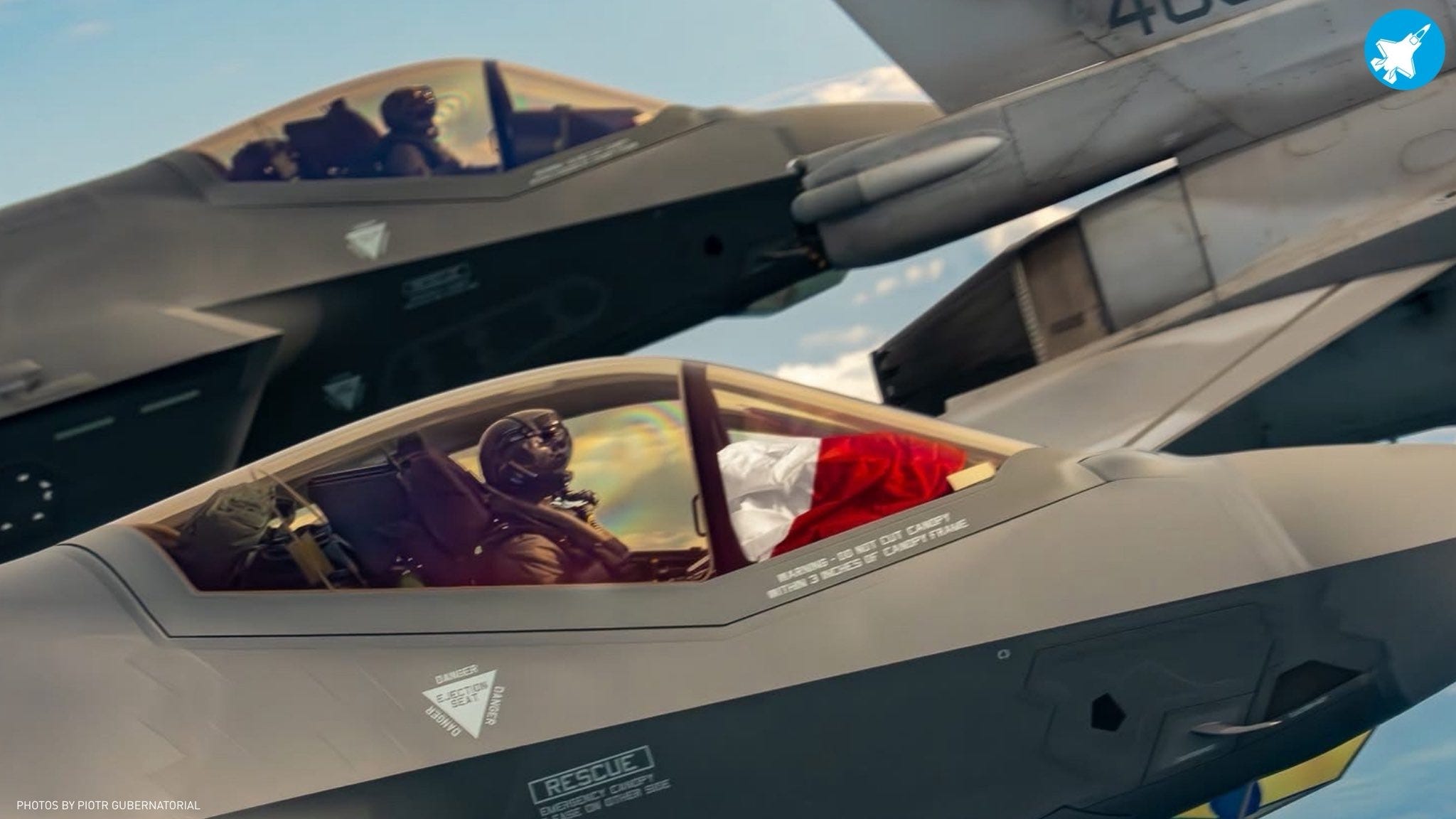
It is doubtful Russia wants to antagonize Poland to the point of generating a kinetic response. Poland boasts one of the largest, best-equipped, and most formidable militaries in Europe. It is the third-largest armed force in NATO (behind only the United States and Turkey), and Warsaw spends the highest percentage of its gross domestic product on defense among all NATO members, 4.5 percent to 4.8 percent — about $47.4 billion to $55 billion.
And Poland has not forgotten World War II nor its subjugation under Moscow rule.
Furthermore, Moscow is not likely to get support from Minsk. Belarusian President Alexander Lukashenko last month ruled out sending troops to fight in Ukraine, saying his soldiers would not become “cannon fodder for Russian President Vladimir Putin’s war.” He added, “I want the Poles, Lithuanians, and Ukrainians to hear me. We do not want to fight with them.”
Polish Defense Minister Władysław Kosiniak-Kamysz said he takes the reports very seriously: “That is why our government has made decisions on the largest rearmament program in our history.”
The Polish military is ranked 21st out of 145 countries in the Global Firepower index.
Decision point: Russia is in no position to challenge the NATO alliance — and certainly not by threatening Poland. As the Kremlin struggles to generate combat power to fight in Ukraine, creating a second front would be counterproductive and could accelerate the collapse of the Putin regime.


