How To Beat the Left's Machine in New York — And the Country
We don't have to resign ourselves to a DSA takeover.
New York City in last night’s primaries completed what it started in 2025.
Brad Lander trounced Congressman Dan Goldman in NY-10. Darializa Avila Chevalier defeated Congressman Adriano Espaillat in NY-13. Claire Valdez won in NY-7, an open seat. The Democratic Socialists of America picked up six or more seats in Albany on top of that, fielding its biggest-ever slate of state candidates. Mayor Zohran Mamdani told supporters at a victory party: “A year ago was not the end of a political movement. It was the beginning.”
He is right.
Every time this happens, the same question gets asked: How did New York get here? The answer is always the same, and we never do anything about it. The candidates who could stop this drift don’t fit neatly into a party box. So we don’t organize around them. We don’t fund them. We barely pay attention until election night, when we watch the results come in and wonder how it happened again.
The left, meanwhile, has a machine. It runs candidates, wins primaries, ousts incumbents, and takes ground election by election. Last night it took three congressional seats. It has garnered wins across the country this year.
Maud Maron ran in 2025 for Manhattan district attorney against incumbent Alvin Bragg. She is a former public defender, a mother of four, and a New Yorker who built a 20-year career in the legal system. She got roughly 100,000 votes. Mr. Bragg won with just under three-quarters of the vote.
One hundred thousand New Yorkers chose a sensible option. It didn’t move the needle.
Why? Not because Maud wasn’t a strong candidate. Because there was no organized coalition behind her. Because common-sense candidates in this city run on the margins, cobble together endorsements from groups that don’t talk to each other, and ask voters to look past a party label to see what’s actually in front of them. Most voters don’t. The machine wins.
The cancellation attempt came before the race even started. Maud had been targeted years earlier for saying things her own legal community didn’t want to hear, things about merit based-education and equity. They called her a racist. She isn’t. But the label did its work, and by the time she ran for DA, the ground had already been prepared against her.
That is how the left keeps winning. It doesn’t just run candidates. It disqualifies the opposition in advance.
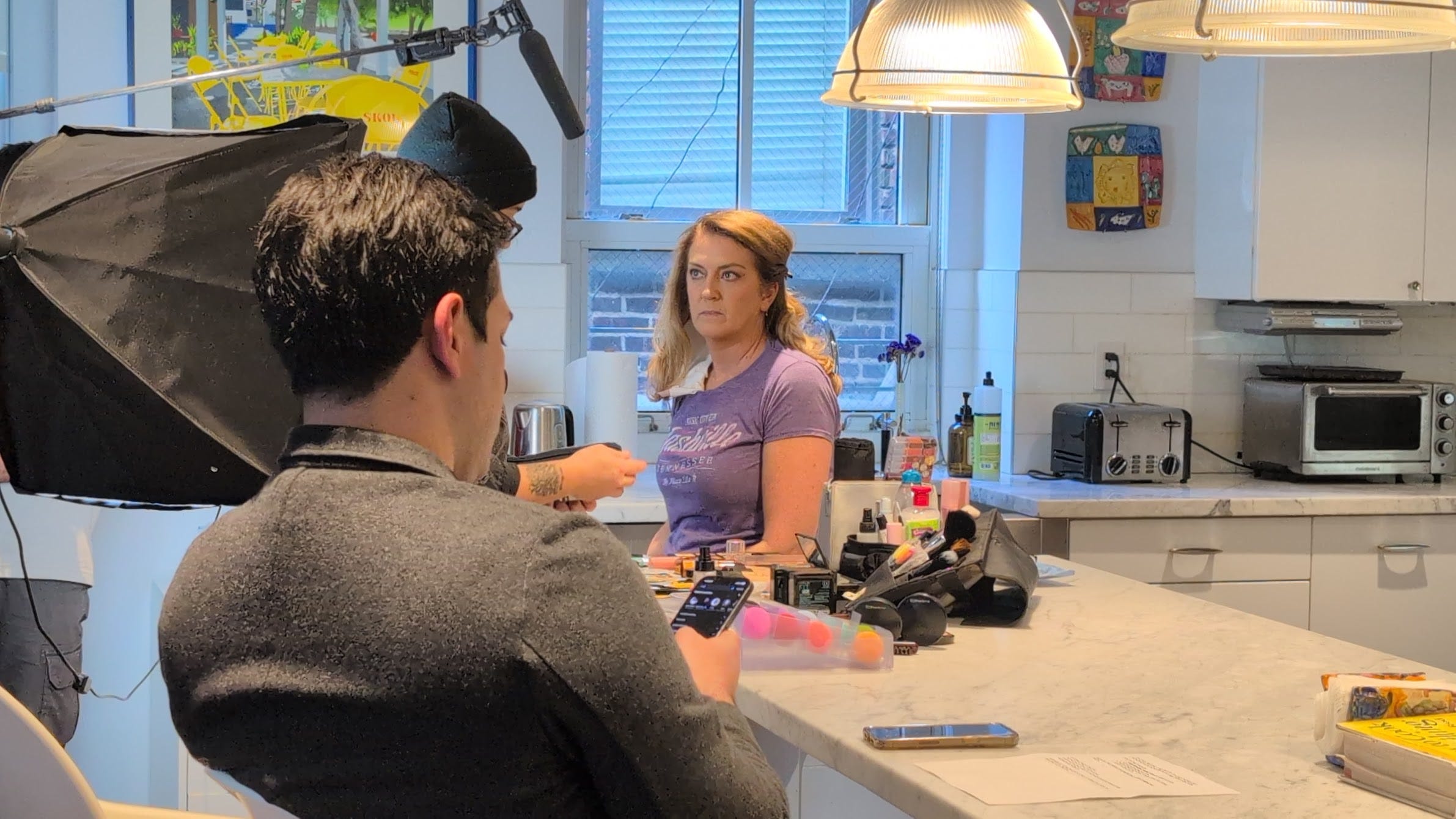
I made a 23-minute documentary for Palladium Pictures about Maud’s race. “Uncancellable” is live now on YouTube and RealClearPolitics. But the film is not really about Maud. It is about what New York keeps passing on: a candidate who told the truth about public safety, who had real experience in the justice system, who wasn’t running to advance an ideology. A common-sense option in a city that needs one more than ever before.
I met Maud in November 2020 at the first open-schools rally in lower Manhattan. I was fighting to reopen New York’s classrooms. So was she. I watched her say the unpopular thing, in public, again and again, without flinching. I made this film because I believe ordinary people telling the truth is the most extraordinary thing happening in America right now and inspires others to do the same.
Jay Bhattacharya said what the data showed and got blacklisted. Scott Atlas said what he thought the government should and shouldn’t do and got smeared for it. Both were eventually vindicated. Jay now runs the National Institutes of Health. But vindication took years, and the COVID fight took a toll on both of them.
Maud never bent to the winds of culture wars. But she got 100,000 votes and went home.
I keep making films about people like this because I think showing them matters. The rage on social media is contagious. So is courage. I saw it at that first open-schools rally in 2020, a handful of parents on a cold morning in lower Manhattan who refused to accept this was just how things were now. I was one of them. Maud was one of them. That is not nothing. But it is not enough on its own.

New York is not unusual. The same pattern plays out in cities across the country. The left runs a coordinated, multi-cycle strategy. Common-sense voters show up for individual candidates and then disperse. There is no coalition, no infrastructure, no plan to take ground back election by election.
Super PACs spent $9.6 million trying to stop DSA candidates in New York’s state legislative races this year, nearly five times what was spent in 2024. They largely failed. Not because the money wasn’t there. Because late spending against an organized movement is not a strategy.
The candidates who can actually win this argument for common sense don’t always come with the right party affiliation. Sometimes they are former Democrats who switched. Sometimes they are independents. Sometimes they are Republicans running in districts where that label costs them before they say a word. We write them off. The machine doesn’t.
Until there is a real coalition behind these candidates, cycle after cycle, we will keep watching nights like last night.
I made a film about one of them. It is 23 minutes. Watch it here. Not because it will fix this. Because understanding what we keep passing on is where it starts.
Natalya Murakhver is a documentary filmmaker, co-founder of Restore Childhood, and a Palladium Pictures 2025 fellow. Her previous film, “15 DAYS: The Real Story of America’s Pandemic School Closures,” crossed 1 million views on X before launching on Amazon Prime, Apple TV, and Google Play.


