Europe, Get It Together While Putin Begins Losing His Grip on Power
Your guide to what's news in foreign affairs — and why it matters.
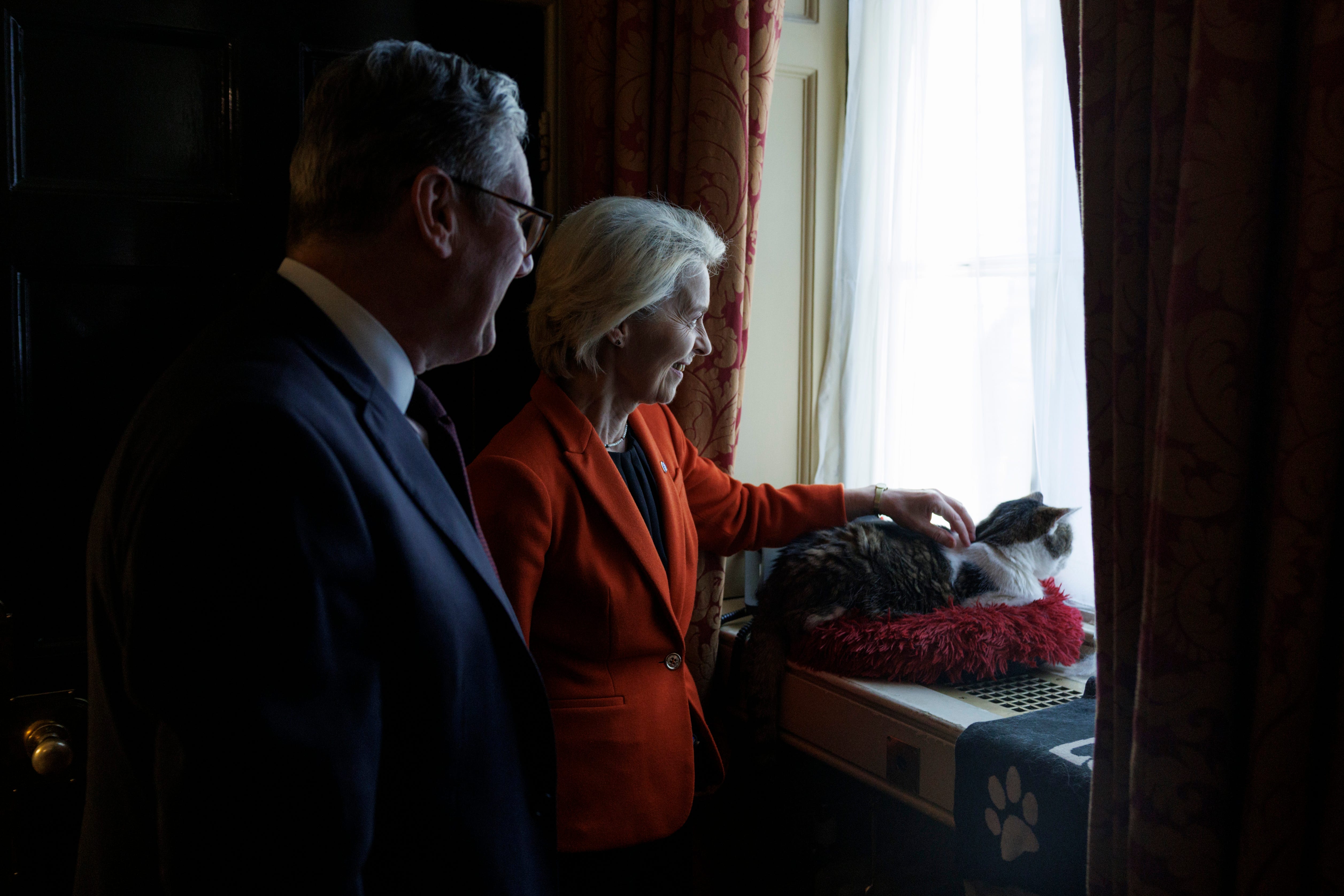
They say cats have nine lives. Maybe so. We know this for sure: Larry the Cat, 10 Downing Street’s permanent feline occupant, is about to get his seventh prime minister.
Embattled British Prime Minister Keir Starmer announced early Monday morning he is resigning either in July or September 1 at the latest. Officials close to him indicated he had no desire to be “a caretaker prime minister.”
Andy Burnham, known as “King of the North,” will likely be Mr. Starmer’s successor. He had been the mayor of Greater Manchester since 2017 until he resigned to run for Parliament last week in a by-election for Makerfield.
Mr. Burnham won that contest handily, defeating in effect a surging Reform party and Mr. Starmer at the same time. Had he lost or only eked out a win, it is possible Mr. Starmer might have tried to survive a leadership contest.
But Mr. Burnham’s decisive 9,000-plus-vote victory margin in Makerfield proved too much. The Labour Party as a whole, already sinking in the polls, made it clear to the prime minister over the weekend that his time in office is up.
Equally significantly, Wes Streeting, whose May 14 resignation as the United Kingdom’s secretary of state for health and social care, accelerated calls for Mr. Starmer to resign, announced Monday he is backing Mr. Burnham’s candidacy.
Mr. Streeting was angling to succeed Mr. Starmer. The Makerfield result likely disabused him of the notion he could win a head-to-head leadership contest against Mr. Burnham.
In the balance: Europe, yet again, is going through a major leadership change. Since Russian President Vladimir Putin’s “special military operation” began in Ukraine February 24, 2022, there have been four British prime ministers.
Boris Johnson was the first to go. Then Liz Truss resigned, and Rishi Sunak was ousted by Mr. Starmer after a historic election loss to the Labour Party last June.
Notably, Mr. Burnham is strikingly thin on foreign affairs and issues of national security. Yet if he wins the likely forthcoming leadership contest, he will immediately become a wartime prime minister and be thrust into the Ukraine spotlight.
So far, he has said the right things on Ukraine and NATO and is a strong supporter of both. But Mr. Burnham is woefully unprepared, in terms of experience and skill sets, to confront Mr. Putin’s war in Europe.
Neither France nor Germany is in a strong position either, due to domestic discontent. As of April, French President Emmanuel Macron’s approval rating stands at 18 percent, while German Chancellor Friedrich Merz is only slightly better at 19 percent.
Decision point: Europe needs to find its guiding star. Its economies are stagnating, Mr. Putin’s war continues to rage in Eastern Europe, and political instability across the West is becoming the norm, not the exception.
The irony is Mr. Putin has never been weaker. As we noted at The Hill, his reign is beginning to crumble. Russia has incurred 1.4 million casualties. Russian-occupied Crimea is increasingly under siege by the Armed Forces of Ukraine. Plus, Moscow is under near-daily Ukrainian drone attack.
Old NATO has it in its grasp to put Mr. Putin’s illegal war in Ukraine down for the count. Yet it cannot get its political act together on a continent-wide basis.
Equally troubling is that New NATO, especially Poland, is squabbling with Ukrainian President Volodymyr Zelensky over atrocities committed during the Russian and German occupations of Poland.
The historical harm was real. But the past is the past. What is at stake now in the face of Mr. Putin is Europe’s future.
If the new British prime minister can put an end to the Russian strongman, then maybe, just maybe, he or she will outlast Larry the Cat. Given Larry’s track record, however, we doubt it.
Larry seems to be the only one in Old Europe right now with a clear idea of how to win.


