
Education Department Takes More Steps Toward Dismantling Itself
It's transferring special education and civil-rights enforcement to other agencies.
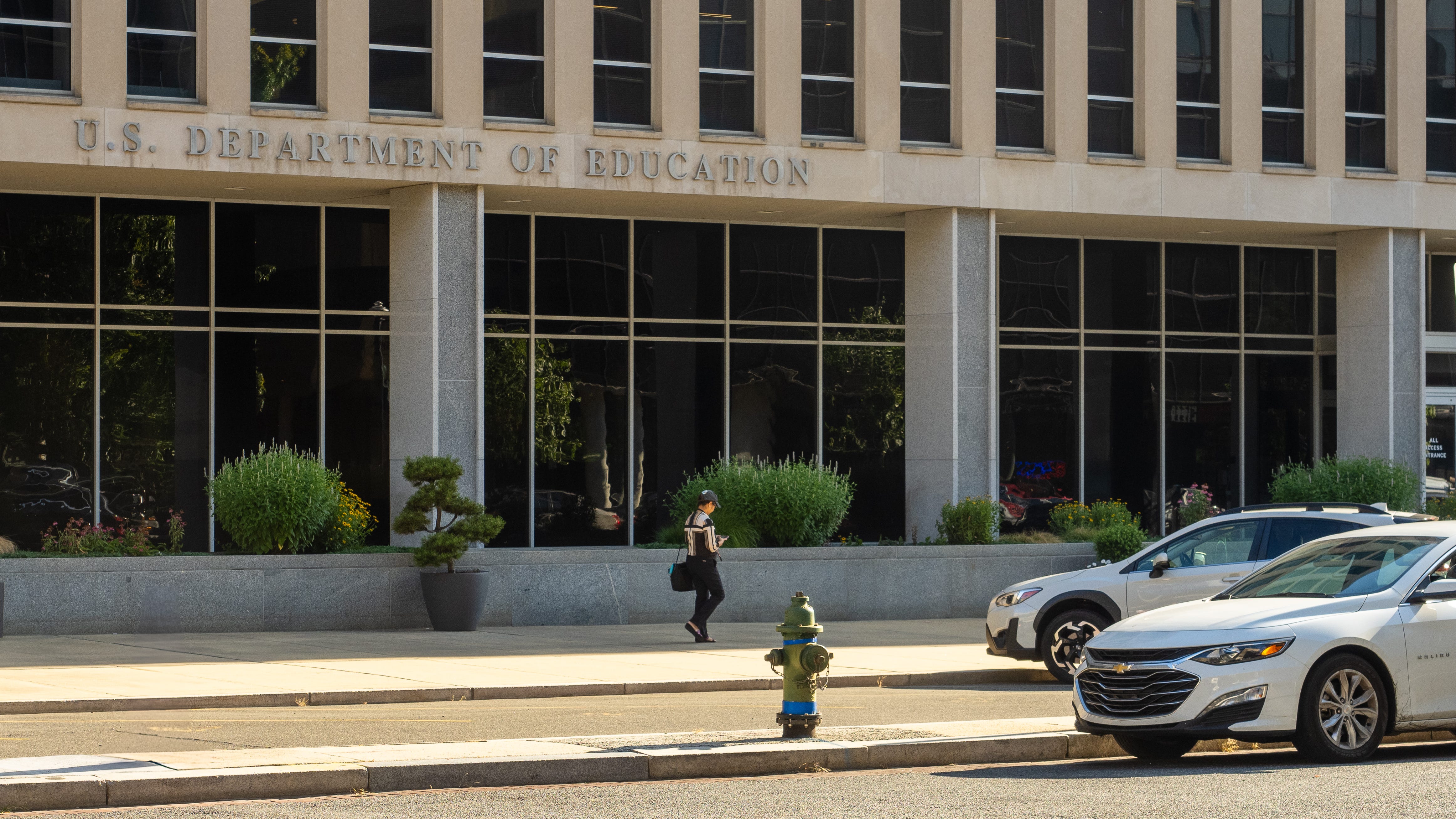
The Trump administration Tuesday shifted major responsibilities for special education and civil-rights enforcement out of the Department of Education, the latest move in its effort to dismantle the agency and redistribute its functions across the federal government.
The Education Department called the changes “additional partnerships.” The Department of Health and Human Services will assume responsibility for programs the Office of Special Education and Rehabilitative Services administers; the Justice Department will take over education-related civil-rights enforcement, student-privacy matters, and related guidance and training.
The move follows a series of interagency agreements announced over the past year that administration officials have described as part of a plan to “break up the federal education bureaucracy” and return authority to states.
President Trump campaigned on eliminating the Education Department, arguing that schooling decisions should be made primarily at the state and local level. While only Congress can formally abolish the department, Education Secretary Linda McMahon has pursued agreements transferring functions to other agencies.
In announcing the latest changes, Ms. McMahon said the accords would improve coordination and service delivery. “Today’s announcements build on our efforts to ensure that Americans with disabilities have access to the support and services they need throughout their lives,” she said.
The administration said moving disability-related programs to Health and Human Services would better align educational services with HHS programs already serving individuals with disabilities.
HHS Secretary Robert F. Kennedy Jr. said the new arrangement “will cut bureaucratic barriers, better align federal resources, and deliver more effective support for individuals with disabilities and their families.”
The Education Department argues transferring the Office of Civil Rights’ functions will strengthen enforcement by placing them within the federal government’s primary civil-rights-litigation agency.
“Every student has an unequivocal right to learn and participate in school activities free from discrimination,” said Acting Attorney General Todd Blanche. “Together, we are advancing a national commitment to ensuring every student is treated with dignity and has an equal opportunity to succeed both in the classroom and on the court or field.”
The Education Department’s Office for Civil Rights has long investigated allegations of discrimination based on race, sex, disability, and other protected categories in schools and colleges receiving federal funds. The Office of Special Education and Rehabilitative Services oversees programs authorized under the Individuals with Disabilities Education Act and related disability initiatives.
The Justice Department already enforces several federal education-related civil-rights laws through its Educational Opportunities Section, including provisions involving disability discrimination, equal-educational opportunities, and school desegregation.
Critics have warned that moving responsibilities outside the Education Department could weaken protections for disabled students and create confusion for families and schools. Advocacy groups argue that dispersing functions among multiple agencies risks fragmenting oversight and reducing accountability.
Chad Rummel, CEO at the Council for Exceptional Children, blasted the move. He told The Washington Star the change “focuses on a campaign promise rather than on outcomes for children with disabilities.”
Mr. Rummel predicted the shift would “cause chaos and confusion for educators and families.”
AASA, the School Superintendents Association, said that “states and districts could face a very different federal posture once DOJ takes on a larger role” in civil-rights cases. While Education’s OCR focused on voluntary complaint resolution, Justice may concentrate on potential prosecutions, the group said.
Regarding the special-education shift to HHS, AASA said, “The proposed structure could fragment critical program activities and create confusion around the funding, guidance and support districts rely on to serve students effectively.”
Supporters of the changes contend the transfers will streamline federal operations, reduce bureaucracy, and place programs in agencies with related expertise. Administration officials have repeatedly described the reorganization as part of an effort to improve efficiency while reducing Washington’s role in education policy.
Michigan Republican Tim Walberg, who chairs the House Education and Workforce Committee, lauded the changes.
“For decades, federal control of education expanded, yet student outcomes declined. Continuing the same approach is failing our students,” he said. “The Trump administration is following through on its promise to fix the nation’s broken system by right-sizing the Department of Education to improve student outcomes. These most recent interagency agreements will preserve access to critical programs for families while cutting bureaucracy and putting resources where they belong — students’ education.”
Virginia Congressman Bobby Scott, ranking Democrat on the panel, had a very different view.
“The whole process of entering into interagency agreements has been undertaken as part of the President’s plan to illegally close ED and ‘return education to the states.’ But we do not need a crystal ball to know what will happen if it is left up to the states to protect students’ civil rights — one only needs to read a history book. When states had no federal oversight, we saw the intentional segregation of public schools, an outright refusal to educate students with disabilities, and a systemic lack of resources for low-income communities,” he told the Star.
“Today’s announcement was purely a political one — made for the President to fulfill a campaign promise. luntly, today’s announcement is not in the best interest of students, families, or their communities. Democrats on the House Committee on Education and Workforce are committed to the protection of civil rights and guaranteeing that all students have access to a quality education.”


