

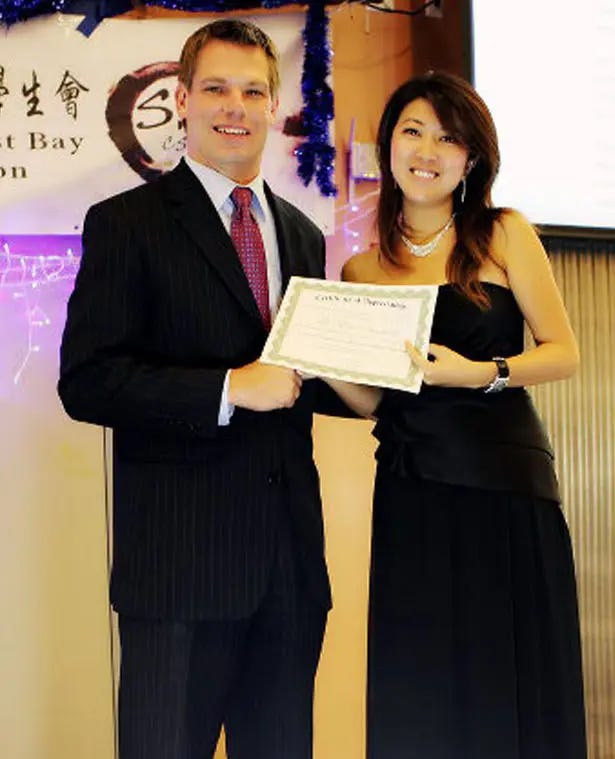
Newly declassified FBI files show federal agents opened a full public-corruption investigation of then-Congressman Eric Swalwell after learning Christine Fang, a Chinese national they were trying to recruit as an informant, helped his political operation.
The files reveal the California Democrat told agents in May 2015 that he had “physical relations with Fang on a handful of occasions” between 2012 and 2015 but “never dated her or had a romantic relationship.” He said he considered the encounters casual while believing Ms. Fang, also known as Fang Fang, wanted a closer romantic relationship.
A later FBI interview disclosed two times Ms. Fang came to Mr. Swalwell’s apartment before he was elected to Congress in 2012. Mr. Swalwell denied remembering a candlelit dinner with her.
On one occasion, Mr. Swalwell said he had argued with his girlfriend. After she left, Ms. Fang came to his apartment and began banging on the door. The 2016 interview notes say Mr. Swalwell “hooked up” with Ms. Fang after she arrived. The report says Ms. Fang did not have access to his apartment.
Mr. Swalwell was not married during the period in which he said the sexual relationship occurred.
The FBI later investigated whether Ms. Fang facilitated illegal foreign-linked campaign contributions and sought internship placements in Mr. Swalwell’s congressional office in return. Agents pursued evidence that could support the “indict[ment] and arrest” of both.
But the bureau ultimately said it found no evidence Mr. Swalwell violated federal corruption laws or of a quid pro quo between Ms. Fang and the congressman or his office. Ms. Fang was not prosecuted after she left the United States in mid-2015.
The disclosures come four months after Mr. Swalwell dropped out of the California governor’s race in April following sexual-misconduct accusations by four women, including allegations of sexual assault and rape. He strongly denied the allegations, but his campaign quickly collapsed as major supporters withdrew their endorsements. He also resigned from Congress.
Tuesday’s special election to fill the remainder of Mr. Swalwell’s term is too close to call. California state Senator Aisha Wahab and Bay Area Rapid Transit Board President Melissa Hernandez, both Democrats, advanced from the June 16 special primary. They also advanced from the June 2 regular primary and will face each other again in November for a full term beginning in January.
Mr. Swalwell’s attorney Sara Azari told the San Francisco Chronicle Monday there is “nothing new” in the documents. “What is new and deeply concerning is the apparent use of federal law enforcement information to punish an outspoken critic of the current administration,” she said. “An investigation that produced no charges and no finding of wrongdoing should not be resurrected years later as a vehicle for political retaliation.”
The records, declassified under a White House memorandum, document an FBI effort to recruit Ms. Fang as an intelligence source and a later public-corruption investigation involving Mr. Swalwell, called “RUSTY THUMBS.”
A March 2014 closure memorandum said it was predicated on information its target had “past and current MSS associations,” referring to China’s Ministry of State Security. The FBI used undercover employees and a fictitious business to develop Ms. Fang and assess her willingness to provide information about connections in China and contacts in the United States.
The recruitment failed. A March 11, 2014, request to close “RUSTY THUMBS” said Ms. Fang had been “initially amenable” to a business relationship with undercover employees but ultimately would not accept the bureau’s suggested, undisclosed further steps.
Six days later, the FBI opened “FRESHMAN FIFTEEN,” shifting its focus to Mr. Swalwell’s office.
A June 14, 2014, FBI memorandum said the probe was based on information that “internships in Congressman Eric Swalwell’s offices were promised in exchange for campaign contributions.” Contributions allegedly were channeled through third parties “to mask the true identity of the donor” and, in some cases, came from foreign nationals.
The FBI identified possible violations involving bribery, false statements, and prohibited campaign contributions. An assistant U.S. attorney had “agreed to prosecute this matter should sufficient evidence be developed,” the memo said.
Another FBI document described Ms. Fang as “the facilitator of a scheme to trade access to Swalwell and internships in his Congressional office in return for campaign contributions.” It said financial records showed she orchestrated contributions “at least twice in 2013 and at least two more times in 2014.”
The proposed undercover operation sought “sufficient evidence to indict and arrest Swalwell and Fang for violations of campaign finance laws and quid pro quo exchanges.” Investigators sought to determine whether Mr. Swalwell knew of “a quid-pro-quo exchange of internships for campaign contributions.”
One interview report says Ms. Fang approached Mr. Swalwell about internships and implied she wanted him to “overlook citizenship requirements for her friends and get them internships” in his district or Washington office. Mr. Swalwell said he never received their names. Ms. Fang never said or implied internships should be provided because she helped raise campaign money.
The records also describe a Las Vegas fundraiser Ms. Fang arranged around June 2014. Mr. Swalwell said he expected a small gathering, but when he arrived, “there were 100 people in the room.”
The FBI gave Mr. Swalwell a defensive briefing April 30, 2015, at the Capitol explaining “the intelligence cycle and methods by which foreign governments and their agents target politicians.” Agents addressed Ms. Fang and her connections to mainland China and Chinese intelligence services.
The investigation failed to prove its central theory. An October 2015 termination report marked it had “NOT MET” the objective of obtaining sufficient evidence to indict and arrest Mr. Swalwell and Ms. Fang for campaign-finance violations and quid pro quo exchanges.
A May 2, 2017, closing communication said: “While investigation did not reveal evidence of a quid pro quo exchange between Fang and the Congressman or his office,” it “did reveal evidence that Fang violated criminal laws.” The bureau listed suspected offenses including prohibited contributions, false statements, false writings, and acting as an unregistered foreign agent.
Ms. Fang had left the United States and was barred from reentry under State Department security authorities. After consultation with the U.S. attorney’s office in San Francisco, the bureau said prosecution was “non-viable due to national security reasons.” The FBI closed the investigation in May 2017.
