
Congress' Churchill vs. Chamberlain Moment Has Arrived
Rep. Don Bacon tells The Washington Star why Republicans should back the Ukraine Support Act.
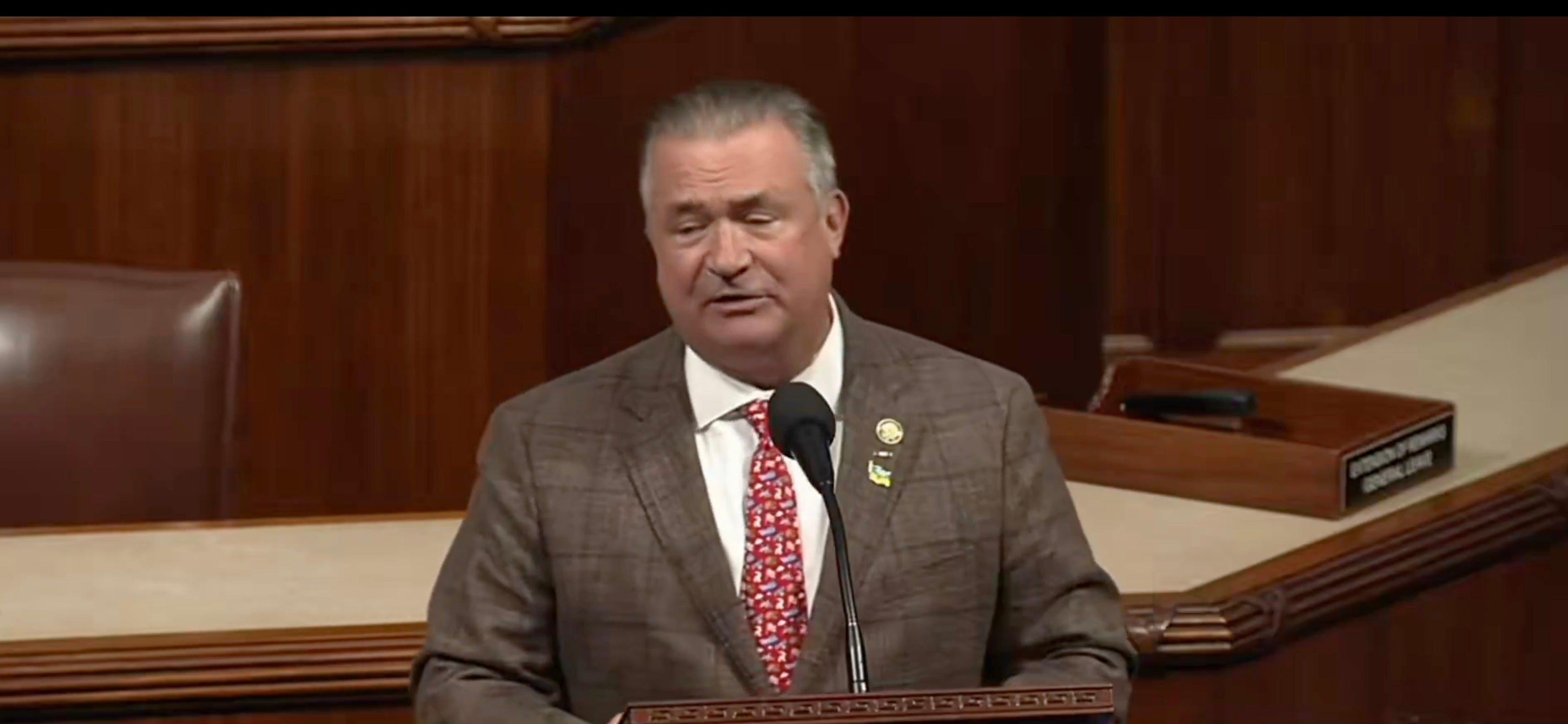
REP. DON BACON TAKES A REAGANESQUE STAND FOR LIBERTY IN UKRAINE
It was, as Republican Congressman Don Bacon posted on X, “our Churchill vs. Chamberlain moment” when the House voted 218-204 Thursday to move forward on the discharge petition that allowed a final vote on the Ukraine Support Act.
Democratic Congressman Gregory Meeks filed the petition July 17, 2025. The New York representative is the ranking member of the House Foreign Affairs Committee. Mr. Bacon, alongside Pennsylvania Congressman Brian Fitzpatrick, signed the discharge petition on 9/11 in 2025.
They were, at the time, the only two Republicans in the House willing to stand against Russia and argue for added financial and military support for Ukraine. Their yearlong effort paid off Thursday evening. The Ukraine Support Act then passed 226-195.
The bill, if passed by the Senate and signed into law by President Trump, provides for approximately $1.3 billion in security and economic aid to Ukraine and up to $8 billion in U.S. loans for weapons and ammunition purchases.
It would revive presidential lend-lease authority through fiscal year 2028 as well as extend through 2027 authorization for the Department of Defense to provide security assistance, training, and intelligence support to Kyiv.
Notably, it would also impose new mandatory sanctions on Russia’s oil and gas sectors, banks, and shadow fleet and levy 500 percent tariffs on certain Russian imports. Equally significant, it would create provisions to hold the Kremlin accountable for war crimes committed in Ukraine. Russian President Vladimir Putin launched the full-scale invasion more than four years ago.
Mr. Bacon, in an exclusive statement to The Washington Star, emphasized after Thursday’s final vote, “The United States must be on the side of good, and that is Ukraine, which is a democracy and wants to be aligned with Americans.”
The retired brigadier general, who served as a wing commander at Ramstein Air Base in Germany facing down the Soviets during the Cold War, told us, “We cannot accept moral ambiguity here when Putin is trying to stamp out the existence of Ukraine and its culture.”
In the balance: The House measure passes to Senate Majority Leader John Thune. It now falls to him to decide whether he is Churchill or Chamberlain.
Let’s hope he too channels Churchill and brings the bill to a vote on the Senate floor. Doing so would ensure Mr. Thune is on the right side of history.
Mr. Bacon gets that. The Nebraska representative told us, “I want the history books to say we did right and clearly stood on the right side.”
The White House and Pentagon should heed his advice. As Mr. Bacon rightly emphasized to us, “the cost of failing in Ukraine will be dreadful. Moldova will follow, and likely the Baltics attacked in the areas where Russian-speaking people are present.”
Plus, the costs would be global in nature. We concur with Mr. Bacon’s assessment “China will also see a green light to take Taiwan” if the United States fails to stop Mr. Putin in Ukraine.
Mr. Bacon left us with this final thought: “Ronald Reagan would have stood up to Putin and helped Ukraine. I am a Reagan Republican.”
We agree with Mr. Bacon’s assertion. The late president undoubtedly would have viewed Kyiv and its fight for liberty as the 21st century’s “shining city upon a hill.”
ICYMI, DEFIANT HEZBOLLAH FIRES ROCKETS AT ISRAEL HOURS AFTER U.S.-BACKED CEASEFIRE WAS SIGNED
Israel and Lebanon entered into a new ceasefire agreement Wednesday aimed at ending the ongoing hostilities between Hezbollah and the Israel Defense Forces.
The U.S.-brokered deal is “contingent on a complete cessation of Hezbollah fire and the evacuation of all Hezbollah operatives from the South Litani Sector.” The agreement’s intent is to create a series of “pilot zones in which the Lebanese Armed Forces will take exclusive control of the territory to the exclusion of all non-state actors.”
Hezbollah responded by launching multiple new rocket volleys into northern and central Israel. Later, Naim Qassem, the leader of the Iranian-backed proxy, rejected the ceasefire, stating, “As long as the occupation continues, the resistance will continue.”
Sound familiar?
It should. Iran is demanding as part of its peace negotiations with the Trump administration that Israel withdraw from all of southern Lebanon before indirect talks can continue. Esmail Qaani, the Islamic Revolutionary Guard Corps Quds Force commander, said resistance in Lebanon is “the duty of all of us.”
In the balance: As we warned in this column Tuesday, Iran is using Hezbollah to create a wedge between Mr. Trump and Israeli Prime Minister Benjamin Netanyahu. Mr. Qassem may be the one rejecting the ceasefire, but Major General Ahmad Vahidi, the head of the IRGC, is the man behind the curtain controlling Hezbollah’s every action.
The White House would do well to understand that Hezbollah is not a means to an end in achieving a lasting peace deal with Iran. Quite the opposite, Hezbollah is being used as leverage against Mr. Trump to forestall any deal.


