An Anti-Data-Center Consensus Is Forming in Michigan
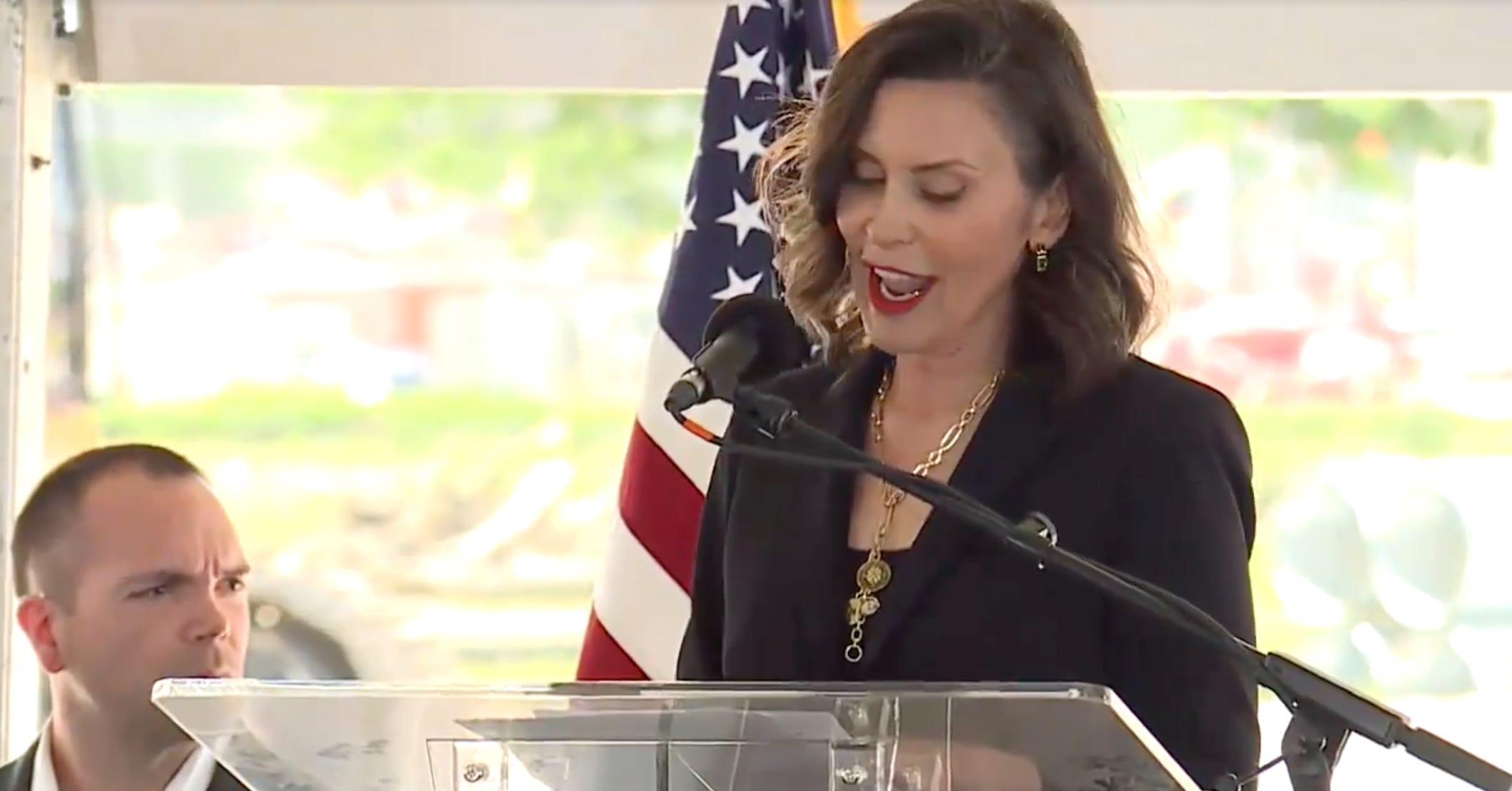
Governor Whitmer had a hot-mic moment at a recent opening of one.
On both sides of the aisle in Michigan, data centers are drawing critics and even talk of a statewide moratorium.
With the governor’s race on the November 3 ballot, the facilities that store and process data, often for artificial intelligence, face a skeptical public and politicians who are listening. That’s a contrast to the current governor, Gretchen Whitmer, who has championed data centers, which use massive amounts of energy, despite her yearslong promotion of “green” power.
Ms. Whitmer drew public outrage after a hot-mic moment at a June 1 ribbon cutting for a data center in Saline. She was caught telling Oracle CEO Clay Magouyrk, “We’re used to people saying ‘No’ and doing it anyway.”
The local community there rejected data centers. But faced with the threat of litigation from the likes of Oracle and OpenAI, and the governor’s support, elected officials caved. Many acres of farmland off a main road, Michigan Avenue, was bought and is being converted into a data center called The Barn.
Saline is a cautionary tale in Michigan of what can happen when big business and state government hear a community say “No” and “do it anyway.”
Secretary of State Jocelyn Benson is the frontrunner in the Democratic primary for the governor’s race. Her husband, Ryan Friedrichs, is a top official at Related Companies, which is building the Saline data center. Related is owned by Stephen Ross, who owns the Miami Dolphins. Ms. Benson at one point served as president of RISE, the Ross Initiative for Sports and Equality.
After the project was approved, Mr. Friedrichs said he is “shifting into a new role” at Related and “no longer working on Related projects in Michigan.” Now his wife is trying to distance herself from her family involvement in data centers. This week, she said she would support a statewide moratorium.
President Trump this week endorsed Congressman John James, the Republican gubernatorial frontrunner. Heading off the possibility of another Saline situation, Mr. James says he supports local control on the data-center question.
“The number one thing ... local control,” he said at a recent campaign event. “Second, we have to make sure that nothing is going on in these things that are going to increase our electricity bills.”
“Local control,” Mr. James emphasized. “Don’t increase my bills. Take care of my water. No pollution. Prioritize brownfields over productive farmland.”
Taken together, this means data centers won’t have a battering ram like Gretchen Whitmer in the governor’s office come 2027.
Neighbors and critics of data centers worry about the noise they generate and the cost they add to electric bills. A Bloomberg News report found that energy bills nearly triple when a data center comes to town.
Data-center supporters, like the governor, say AI technology is inevitable, and it’s important for Michigan to get a piece of the field.
A day after the groundbreaking in Saline, Ms. Whitmer told reporters that data centers could work for Michigan if held to a “high standard.”
She signed a 2023 law giving tax breaks to data centers opening in Michigan. As the state’s website explains: “This exemption eliminates Michigan’s 6% sales and use tax on eligible data center construction and equipment purchases.”
“I think one thing’s very clear, everyone has a cell phone in our pocket,” Ms. Whitmer told reporters. “We are all, more and more, consuming technology and data, and these data centers are going to get built. So my thought is if we can hold them to a high standard and do it in Michigan, that’s the best way to do it. Not watch them go everywhere else and do it in a really bad way.”
A rally this week on the Michigan Capitol lawn drew a bipartisan cast of characters, including state Senator Jim Runestad — who doubles as chair of the Michigan Republican Party — and Dylan Wegela, a socialist Democratic state representative.
Will Lawrence, one of the Democrats vying to run against Congressman Tom Barrett, whose Lansing-area seat is considered the hottest in America, also spoke out at the rally. He, too, supports a moratorium.
“I think 12 [months] is a good number,” he said. “But if it takes longer, then it will take longer.”
State Representative Josh Schriver, a conservative Republican who put the rally together, said the issue “crosses every line in our politics.”
“When something this big is going to use this much water and our power and sit next to our kids’ schools for the next 40 years,” Mr. Schriver told The Detroit News, “shouldn’t the people who actually live here get a real say and real answers before it goes up?”


